SEBACEOUS HYPERPLASIA
SEBACEOUS HYPERPLASIA ICD-10: D23.L16
• These are very common lesions in older persons and are confused with small BCCs. Also occurs in solid organ transplant recipients treated with cyclosporine. The lesions are 1 to 3 mm in diameter and have both telangiectasia and central umbilication (Fig. 9-44).
• Two features distinguish sebaceous hyperplasia from nodular BCC: (1) Sebaceous hyperplasia is soft to palpation, not firm as in nodular BCC; and (2) with firm lateral compression, it is often possible to elicit a very small globule of sebum in the valley of the umbilicated portion of the lesion.
• Sebaceous hyperplasias can be treated with light electrocautery.
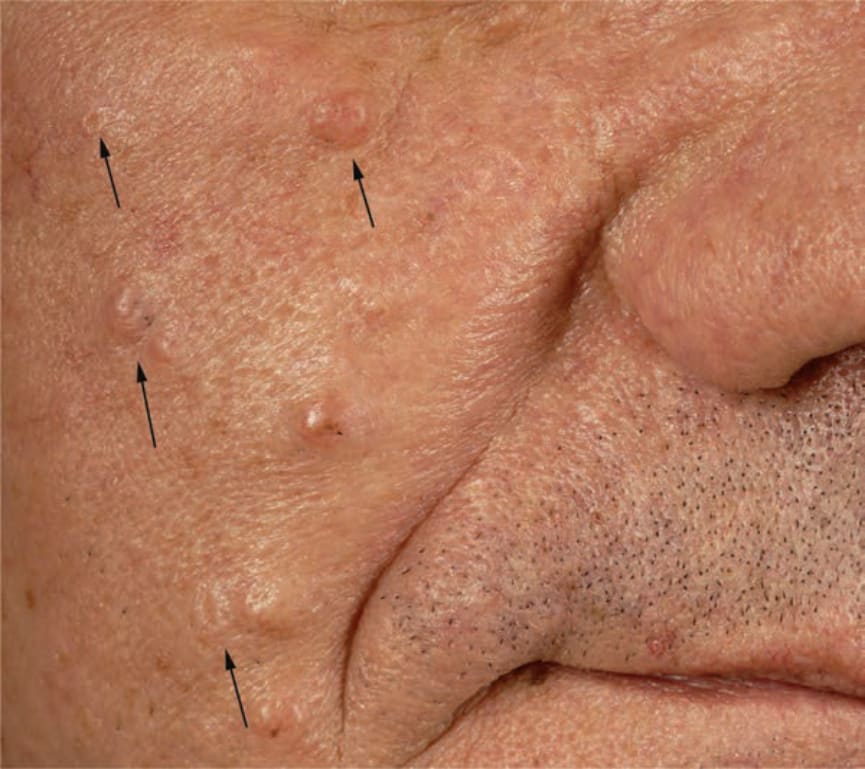
FIGURE 9-44 • Sebaceous hyperplasia 1- to 4-mm smooth papules on the cheek of a 65-yearold man. They look like small basal cell carcinomas but have a central umbilication (arrows).