GINGIVAL HYPERPLASIA
GINGIVAL HYPERPLASIA
• Findings: Hypertrophy of both the free and attached gingivae, particularly the interdental papillae (Fig. 33-9).
• Inflammatory enlargement: Most common cause of gingival enlargement. Caused by edema and infective cellular infiltration caused by prolonged exposure to bacterial plaque; fibrosis occurs if untreated.
• Drug-induced fibrous hyperplasia of gingivae: May cover the teeth and is associated with:
• Anticonvulsants: Phenytoin, succinimides, and valproic acid.
• Calcium channel blockers: Nifedipine and verapamil.
• Cyclosporine.
• Systemic conditions/disorders:
• Pregnancy, puberty, vitamin C deficiency, and glycogen storage disease.
• Chronic myelomonocytic leukemia (Fig. 33-9).
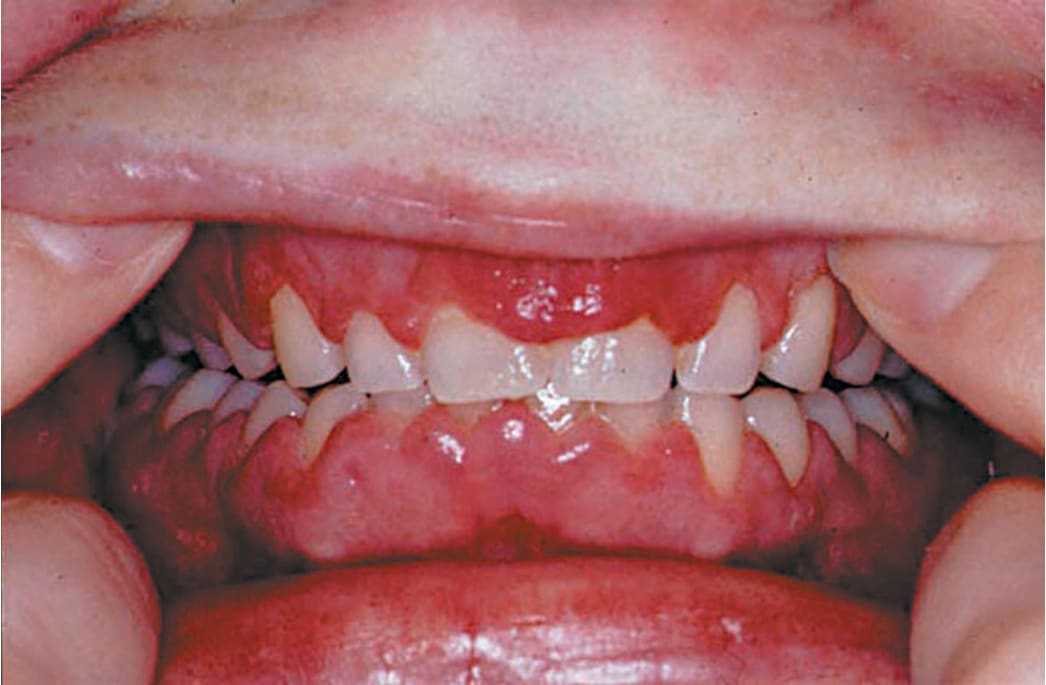
FIGURE 33-9 • Gingival hyperplasia: Acute monocytic leukemia The gingivae show hyperplasia resulting from infiltration with leukemic monocytes.