COLLODION BABY
COLLODION BABY ICD-10: Q80.2
• Encasement of the entire baby in a transparent parchment-like membrane (Fig. 4-12A), which impairs respiration and sucking.
• Breaking and shedding of the collodion membrane initially leads to difficulties in thermoregulation and increased risk of infection.
• Skin is bright red and moist (Fig. 4-12A). After healing, skin appears normal for some time until signs of ichthyosis develop.
• Collodion baby may be the initial presentation of lamellar ichthyosis or another, less common form of ichthyosis not discussed here.
• Collodion baby also may be a condition that, after the collodion membrane is shed and the resultant erythema has cleared, will progress to normal skin for the rest of the child’s life (Fig. 4-12B).
• Management: Keep the newborn in the incubator and monitor temperature, fluids, and nutrient replacement. Aggressive antibiotic therapy for skin and lung infection.
A
B
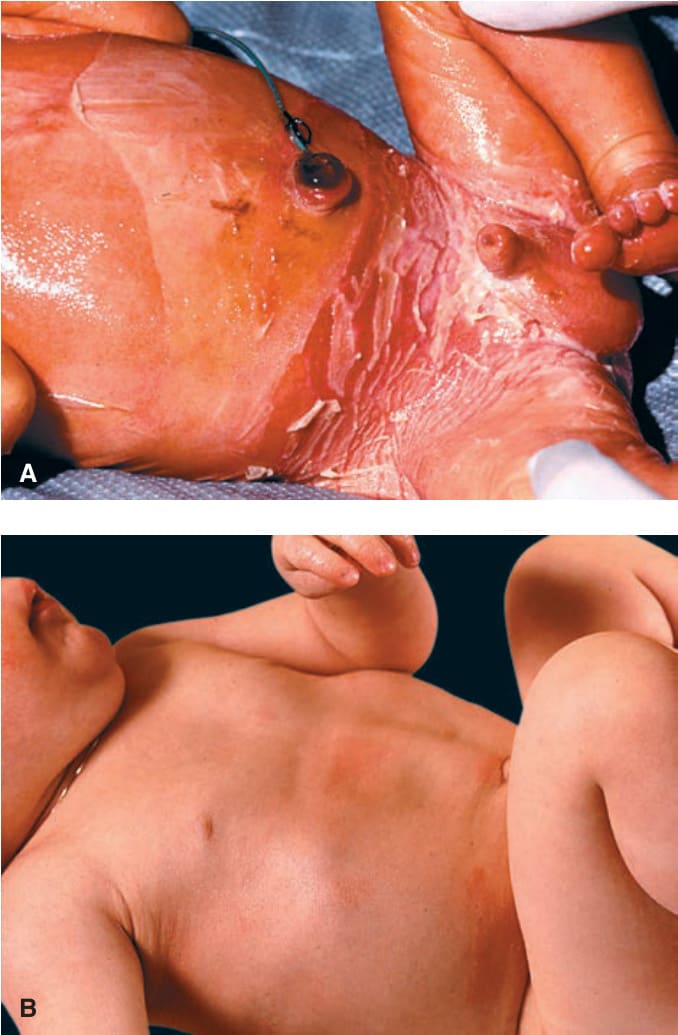
FIGURE 4-12 • Ichthyosis in the newborn (A) “Collodion baby” shortly after birth with a parchment-like membrane covering the entire body. In some areas, the membrane has ruptured and is being shed leaving oozing, raw-looking skin. (B) At 8 months of age, the same infant is a beautiful baby with minimal residual scale and erythema.