EPIDERMAL INCLUSION CYST
EPIDERMAL INCLUSION CYST ICD-10: L72.010
• An epidermoid cyst is the most common cutaneous cyst, derived from epidermis or the epithelium of the hair follicle, and is formed by cystic enclosure of epithelium within the dermis that becomes filled with keratin and lipid-rich debris.
• It occurs in young to middle-aged adults on the face, neck, upper trunk, and scrotum.
• The lesion, which is usually solitary but may be multiple, is a dermal-to-subcutaneous nodule, 0.5 to 5 cm, which often connects with the surface by keratin-filled pores (Fig. 9-31).
• The cyst has an epidermal-like wall (stratified squamous epithelium with well-formed granular layer); the content of the cyst is keratinaceous material—cream colored with a pasty consistency and the odor of rancid cheese. Scrotal lesions may calcify.
• The cyst wall is relatively thin. Following rupture of the wall, the cyst contents initiate an inflammatory reaction, enlarging the lesion manifold; the lesion is now associated with a great deal of pain. Ruptured cysts are often misdiagnosed as being infected rather than ruptured.
• Synonyms: Wen, sebaceous cyst, infundibular cyst, epidermal cyst.
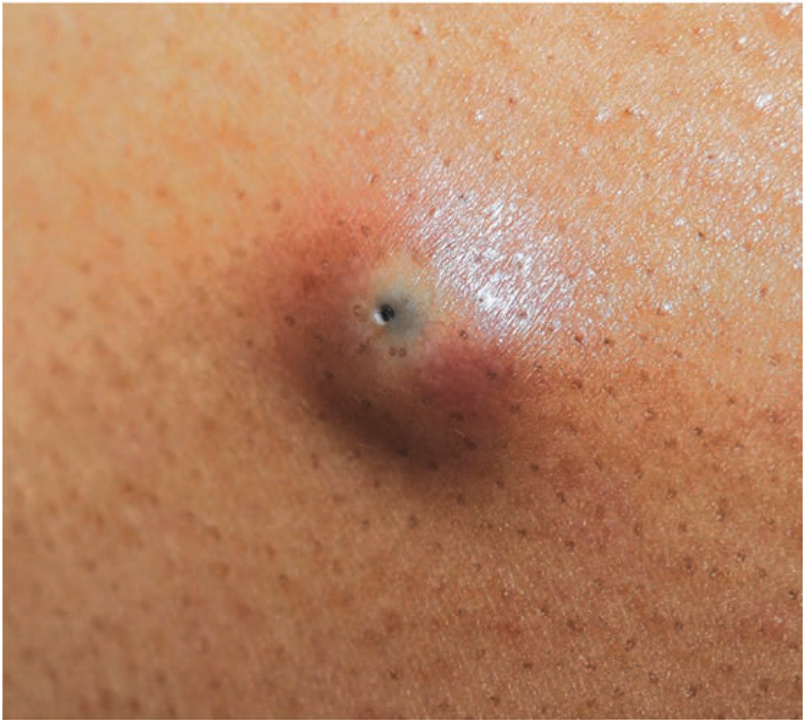
FIGURE 9-31 • Epidermoid cyst A rounded nodule within the dermis with an opening (which is not always visible) in which caseous keratinous material can be expressed.