ALLERGIC CONTACT DERMATITIS CAUSED BY PLANTS
ALLERGIC CONTACT DERMATITIS CAUSED BY PLANTS ICD-10: L23.7
• Termed allergic phytodermatitis (APD).
• Occurs in sensitized individuals after exposure to a wide variety of plant allergens.
• Characterized by an acute, very pruritic, eczematous dermatitis, often in a linear arrangement.
• In the United States, poison ivy/oak are by far the most common plants implicated.
Note: Phytophotodermatitis is a different entity. It is a photosensitivity reaction occurring in any individual with a photosensitizing plant-derived chemical on the skin and subsequent sun exposure (see Section 10).
EPIDEMIOLOGY AND ETIOLOGY
AGE OF ONSET All ages. Very young and very old are less likely to be sensitized. Sensitization is lifelong. ETIOLOGY Pentadecylcatechols, present in the Anacardiaceae plant family, are the most common sensitizers in the United States. They cross-react with other phenolic compounds such as resorcinol, hexylresorcinol, and hydroxyquinones. PLANTS Anacardiaceae Family Poison ivy (Toxicodendron radicans), poison oak (T. quercifolium, T. diversilobum), and poison sumac (T. vernix). Plants related to poison ivy group: Brazilian pepper, cashew nut tree, ginkgo tree,
Indian marker nut tree, lacquer tree, mango tree, and rengas tree. GEOGRAPHY Poison ivy occurs throughout the United States (except in the extreme southwest) and southern Canada; poison oak is predominantly on the west coast. Poison sumac and poison dogwood occur in woody, swampy areas. EXPOSURE Telephone and electrical workers working outdoors. Leaves, stems, seeds, flowers, berries, and roots contain milky sap that turns to a black resin upon exposure to air. Cashew oil, unroasted cashew nuts (heat destroys hapten); cashew oil in wood (Haitian voodoo dolls, swizzle sticks), resins,
printer ink, and mango rind. Also occurs in the marking nut tree of India, the laundry marker (dhobi itch), and furniture lacquer from the Japanese lacquer tree. SEASON APD usually occurs in the spring, summer, and fall. It can also occur year-round if exposed to stems or roots. In the United States southwest, it occurs year-round.
PATHOGENESIS
All Toxicodendron plants contain identical allergens. Oleoresins are present in milky sap in leaves, stems, seeds, flowers, berries, and roots, which are called urushiol. The haptens are the pentadecylcatechols (1,2-dihydroxybenzenes with a 15-carbon side chain in
position three). Washing with soap and water removes oleoresins. More than 70% of people can be sensitized. Dark-skinned individuals are less susceptible to APD. After first exposure (sensitization), dermatitis occurs 7 to 12 days later. In a previously sensitized person (maybe many decades before), dermatitis occurs in <12 hours after re-exposure. Note: Blister fluid does not contain hapten and cannot spread the dermatitis.
CLINICAL MANIFESTATION
EXPOSURE Poison Ivy/Oak Dermatitis Direct plant exposure: plant brushes against exposed skin giving rise to linear lesions (Fig. 2-8);
usually resin is not able to penetrate the thick stratum corneum of the palms/soles.
Food-Containing Urushiol Lips exposed to unpeeled mango or unroasted cashew nuts. Mucous membranes uncommonly experience APD, but ingestion of urushiol can produce ACD of the anus and perineum. SKIN SYMPTOMS Pruritus, mild to severe. Often sensed before any detectable skin changes. Pain in some cases. CONSTITUTIONAL SYMPTOMS Sleep deprivation resulting from pruritus. SKIN LESIONS Initially, well-demarcated patches of erythema, characteristic linear lesions (Fig. 2-8); → papules and edematous plaques; may be severe especially on the face and/or genitals, resembling cellulitis (Fig. 2-9) → microvesiculation → vesicles and/or bullae (Figs. 2-8 and 2-10) → erosions, crusts. Postinflammatory hyperpigmentation common in darker skinned individuals.
Distribution Most commonly on exposed extremities, where contact with the plant occurs; blotting can transfer to any exposed site; the palms/soles are usually spared. However, lateral fingers can be involved.
Clothing-Protected Sites Oleoresin can penetrate damp clothing onto covered skin; wearing clothing previously contaminated with resin can re-expose the skin.
Nonexposed Sites “Id”-like reaction or some systemic absorption can be associated with disseminated urticarial, erythema multiforme-like, or scarlatiniform lesions away from sites of exposure in some individuals with well-established APD.
LABORATORY EXAMINATIONS
DERMATOPATHOLOGY See the previous discussion of ACD. PATCH TESTS WITH PENTADECYLCATECHOLS Contraindicated as it can sensitize the individual to hapten.
DIAGNOSIS
By history and clinical findings only.
DIFFERENTIAL DIAGNOSIS
ACD to other allergens, phytophotodermatitis (see Section 10), soft-tissue infection (cellulitis, erysipelas), AD, inflammatory dermatophytosis, early herpes zoster, and fixed drug eruption.
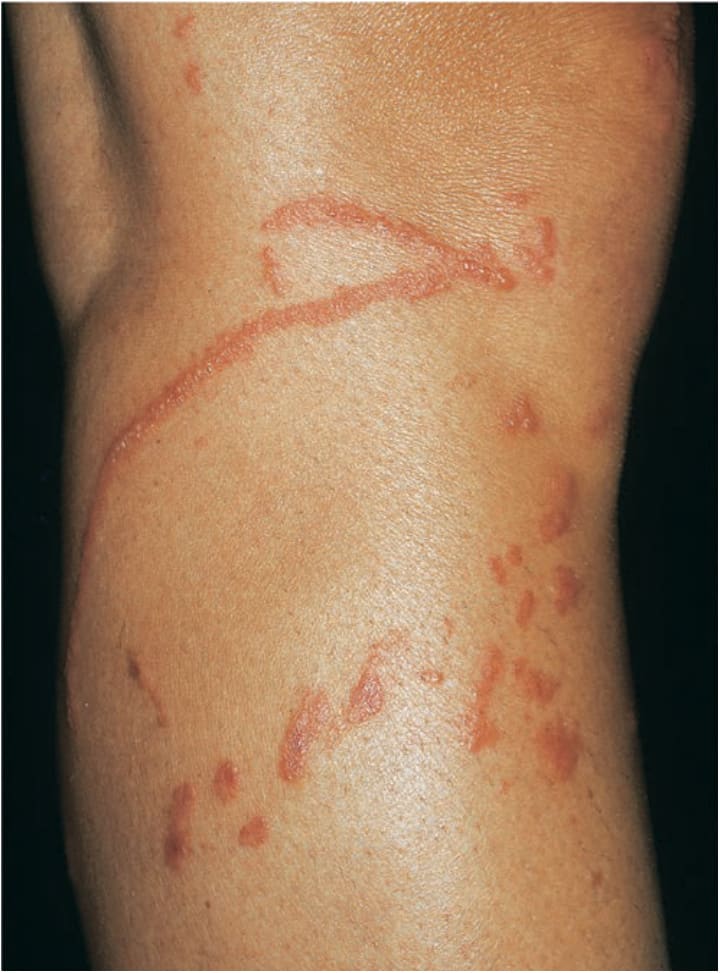
FIGURE 2-8 • Allergic phytodermatitis of leg: poison ivy Linear vesicular lesions with erythema and edema on the calf at sites of direct contact to the skin 5 days after exposure to poison ivy leaves.
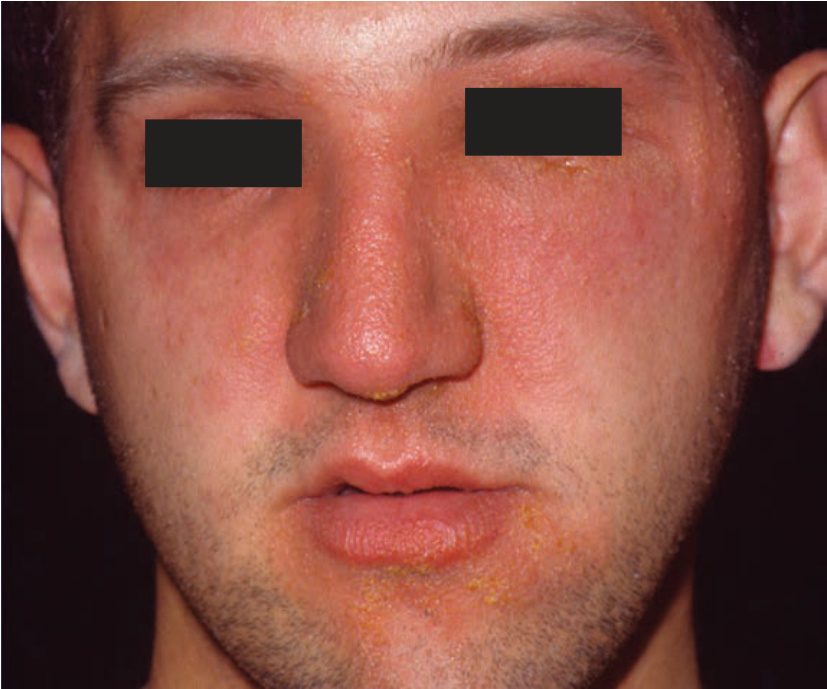
FIGURE 2-9 • Allergic phytodermatitis of the face: poison ivy Extremely pruritic, erythema, edema, and microvesiculation in the periorbital and perioral area in a previously sensitized young man, occurring 3 days after exposure.
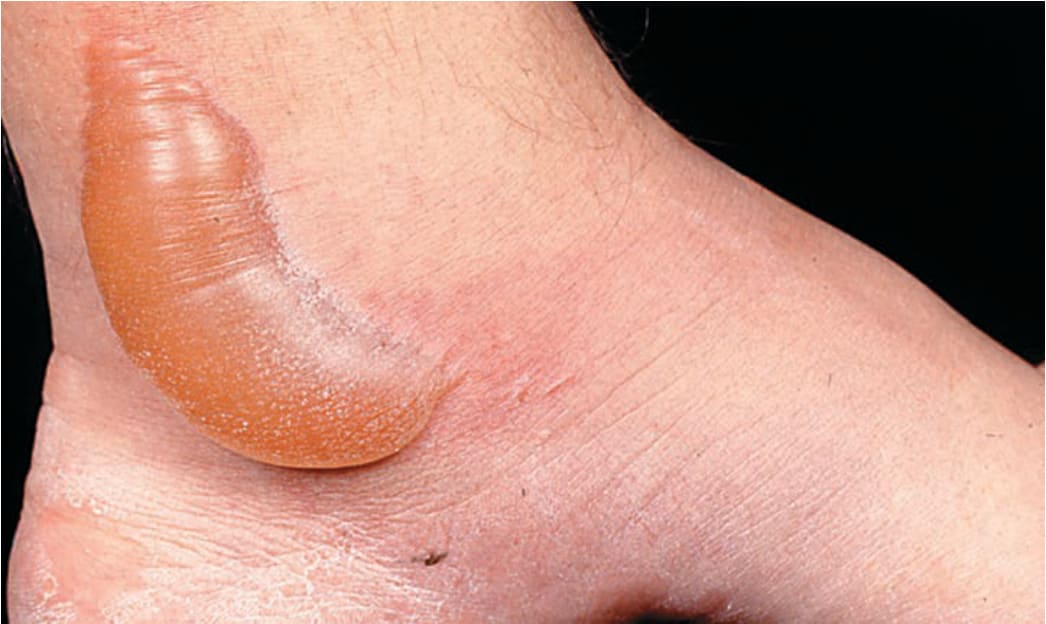
FIGURE 2-10 • Acute allergic phytodermatitis, bullous This eruption occurred in a patient who had walked barefoot through a forest. It later spread as a papular eruption to the rest of the body. Similar lesions were present on the other foot and lower leg. Differential diagnosis included acute bullous contact dermatitis to caterpillars. Phytophotodermatitis was excluded because at the time of exposure, there was a heavily clouded sky and a papular eruption occurred later on. Caterpillar dermatitis was excluded because of the multiplicity of the lesions and because upon patch testing, the patient was positive to Toxicodendron haptens. Note, patch testing to urushiol is no longer done to avoid sensitization of patients.