DYSHIDROTIC ECZEMATOUS DERMATITIS
DYSHIDROTIC ECZEMATOUS DERMATITIS ICD-10: L30.1
• Dyshidrotic eczema is a special vesicular type of hand and foot dermatitis. Acute, chronic, or recurrent dermatosis of the fingers, palms, and soles.
• Sudden onset of many deep-seated pruritic, clear “tapioca-like” vesicles (Fig. 2-20).
• Large bullae can occur (pompholyx).
• Later scaling fissures and lichenification.
• Itching, when erosive painful.
• Secondary bacterial infection: pustules, cellulitis, lymphangitis, and painful lymphadenopathy.
• Recurrent attacks are the rule.
• Treatment: topical high-potency corticosteroids, intralesional triamcinolone 3 to 5 mg/mL for small areas; in severe cases, a short course of prednisone: starting with 1 mg/kg and tapering over 2 to 3 weeks; systemic antibiotics for secondary infections. Also phototherapy, cyclosporine, methotrexate.
Synonyms: Pompholyx, vesicular palmar eczema.
A
B
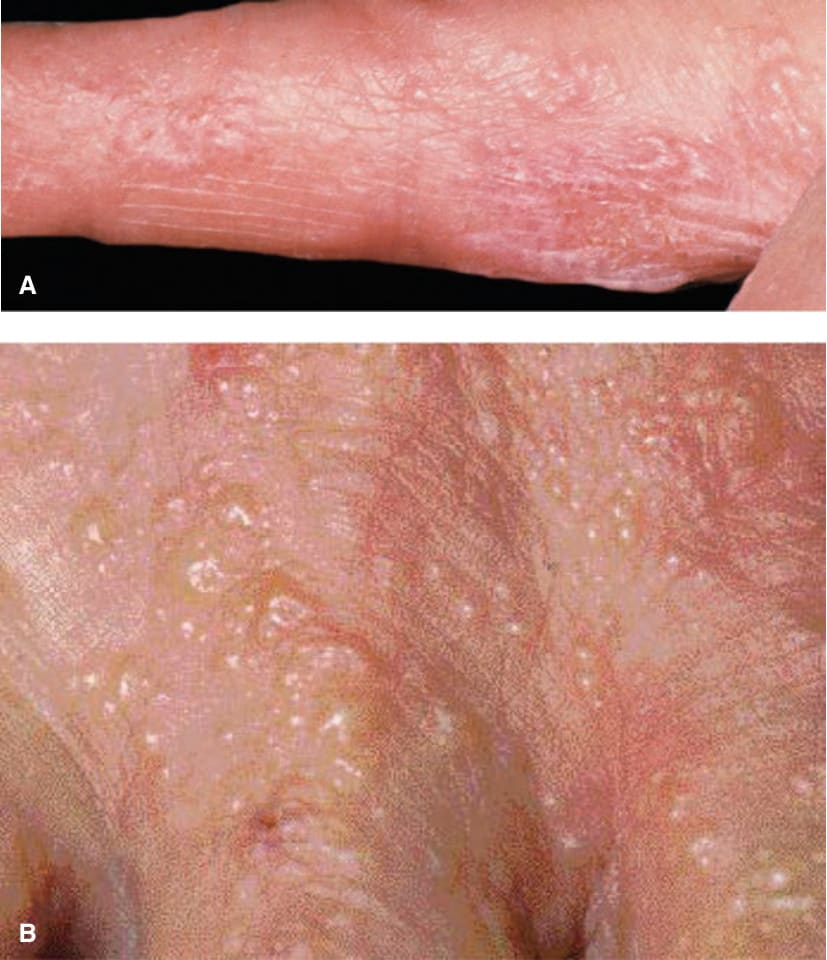
FIGURE 2-20 • Dyshidrotic eczematous dermatitis Confluent tapioca-like vesicles on the lateral aspects of fingers (A) and finger webs and dorsa (B).