X-LINKED RECESSIVE ICHTHYOSIS
X-LINKED RECESSIVE ICHTHYOSIS ICD-10: Q80.1
• Occurs in males, X-linked recessive; gene locus Xp22.32.
• Steroid sulfatase deficiency. Accumulation of cholesterol sulfate resulting in retention hyperkeratosis associated with normal epidermal proliferation.
• Incidence 1:2000 to 1:6000.
• Onset soon after birth.
• Prominent, adherent brown scales on the neck, extremities, trunk, and buttocks (Fig. 4-5).
• Involvement of flexural regions (Fig. 4-6).
• Absence of palm or sole involvement.
• Comma-shaped stromal corneal opacities (asymptomatic) in 50% of adult males. Present in some female carriers.
• Laboratory: Cholesterol sulfate level ↑; increased mobility of β-lipoproteins in electrophoresis. Steroid sulfatase decreased or absent.
• Dermatopathology: Hyperkeratosis and granular layer present.
• Prenatal diagnosis: Amniocentesis, steroid sulfatase ↓ in chorionic villus samples.
• Course: No improvement with age. Worse in temperate climates and winter.
• Management: Hydration of stratum corneum and keratolytic agents as in ichthyosis vulgaris. Marked improvement with systemic retinoids (acitretin and isotretinoin), intermittent treatment with careful monitoring of toxicity.
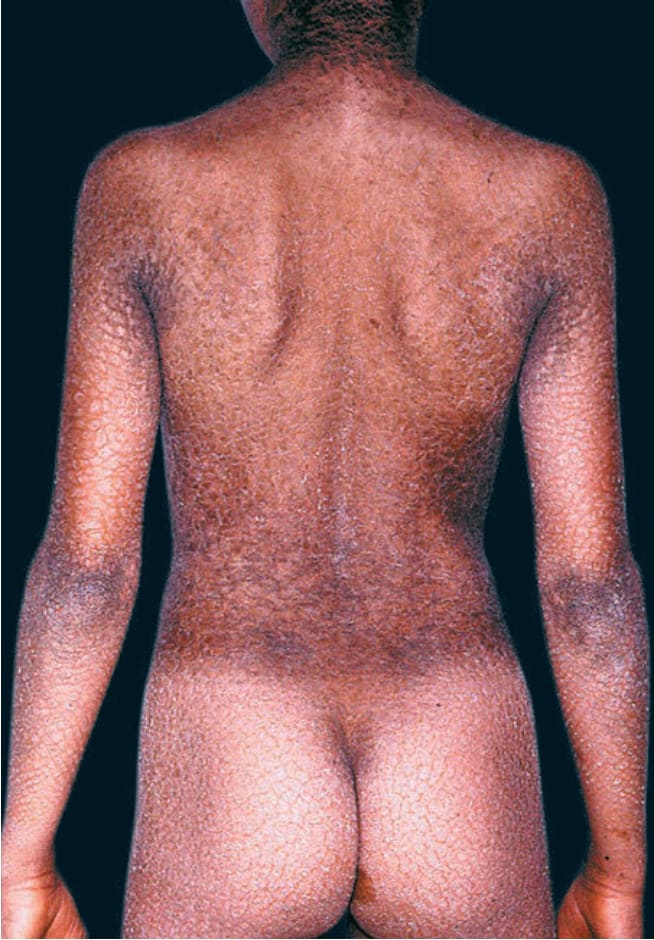
FIGURE 4-5 • X-linked ichthyosis: trunk, buttocks, and arms Dark hyperkeratosis with tessellated scales gives a dirty appearance in this 12-year-old boy.
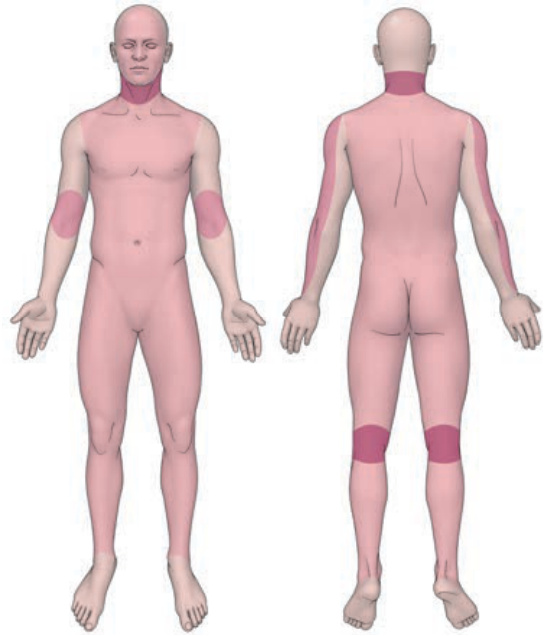
FIGURE 4-6 • Distribution of X-linked ichthyosis.