LAMELLAR ICHTHYOSIS
LAMELLAR ICHTHYOSIS ICD-10: Q80.2
• Onset at birth, usually as collodion baby (p. 83).
• Equally in both sexes; incidence ≤1:300,000.
• Autosomal recessive. At least 14 mutations of gene encoding transglutaminase 1 (TGM1), which leads to impaired stratum corneum barrier.
• Soon after birth, collodion membrane shed with subsequent large, coarse, tessellated scales involving the entire body (Figs. 4-7 and 4-8). The scales are thick, brown, accumulated on lower extremities, flexural areas involved (Fig. 4-9).
• Hands, feet involvement varies; accentuation of palmar/plantar creases.
• Eyes: Ectropium (Fig. 4-7) and eclabium.
• Scalp: Hairs bound down by scales; scarring alopecia.
• Mucous membranes; nails: Occasional dystrophy secondary to nail fold inflammation.
• Heat intolerance; obstruction of eccrine glands impairs sweating.
• Laboratory: Hyperkeratosis with normal to increased granular layer. Skin biopsies can help with diagnosis via electron microscopy.
• Course: Persists throughout life, no improvement with age.
• Management: Newborn, see collodion baby, p. 83. Adults: Emollients, keratolytics, systemic retinoids as in ichthyosis vulgaris and X-linked recessive ichthyosis. Instruct about overheating.
Hair loss FIGURE 4-9 • Distribution of lamellar ichthyosis.
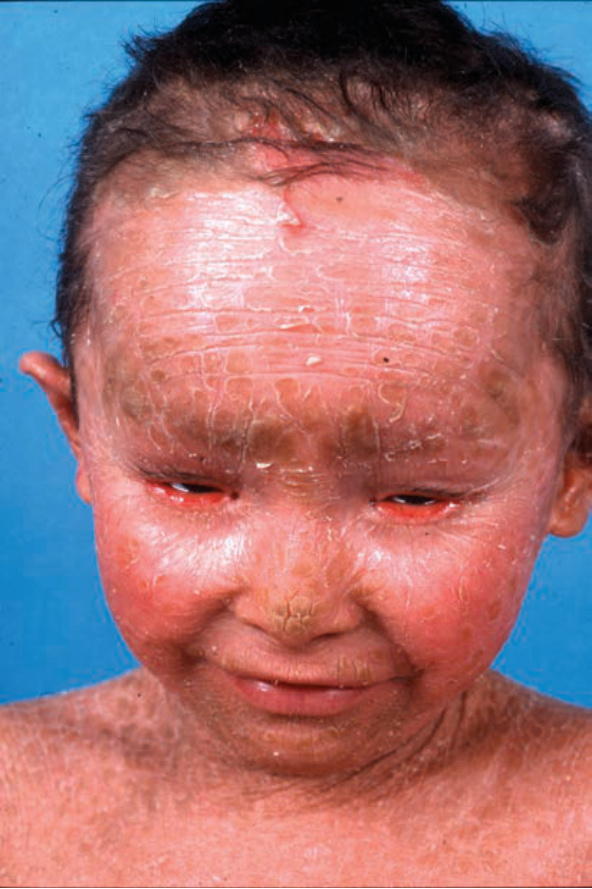
FIGURE 4-7 • Lamellar ichthyosis There is lamellar scaling hyperkeratosis, pronounced ectropium, and beginning alopecia on this 6-year-old boy.
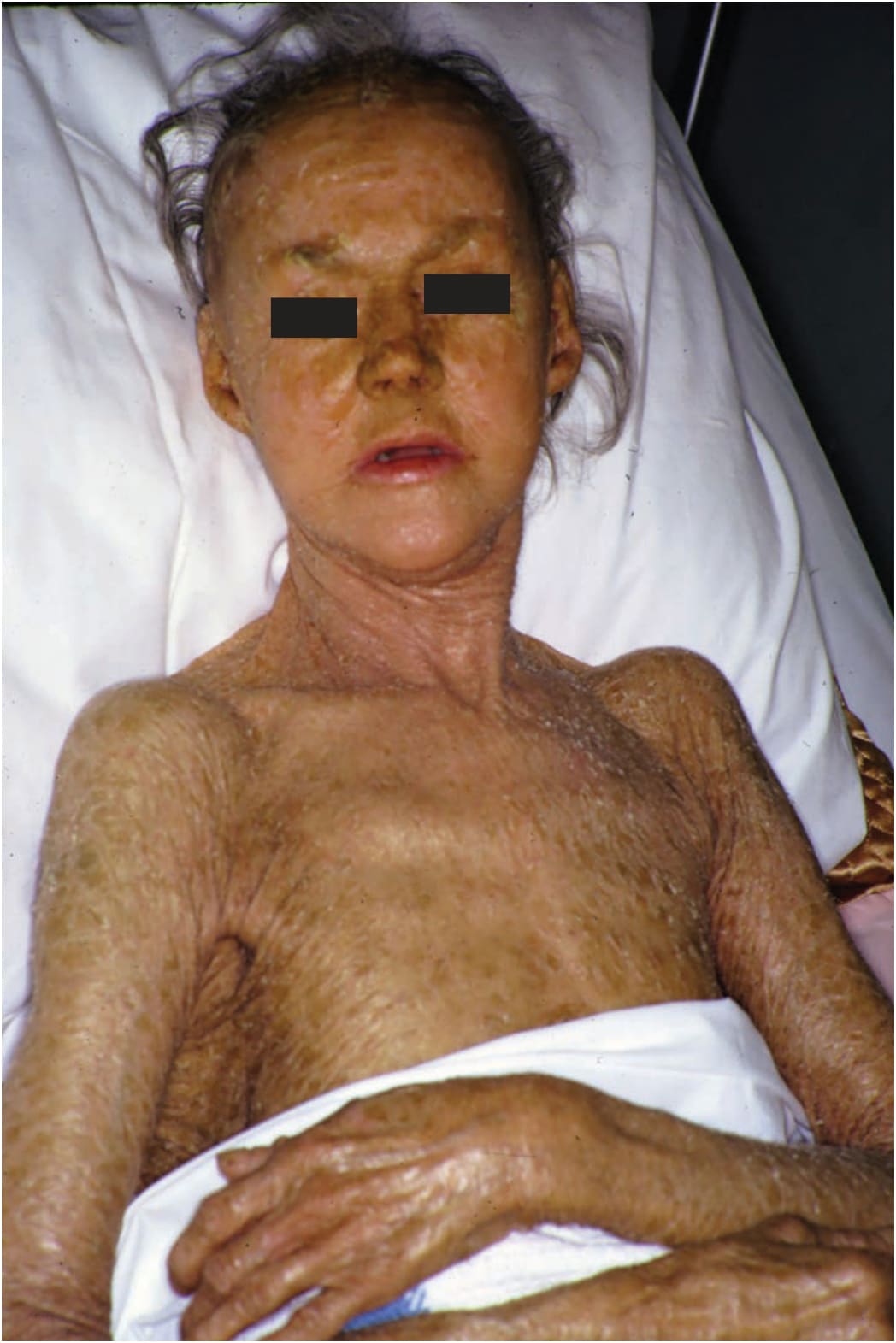
FIGURE 4-8 • Lamellar ichthyosis Large plate-like scaling with ectropion.
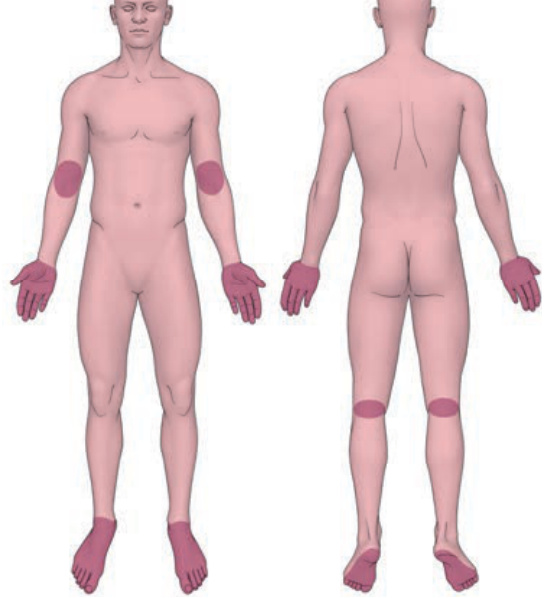
圖 4-9