EPIDERMOLYTIC ICHTHYOSIS
EPIDERMOLYTIC ICHTHYOSIS ICD-10:Q80.8
• Autosomal dominant. Mutation of genes that encode epidermal differentiation keratins, KRT1, and KRT10.
• Presents at or shortly after birth with erythema, blistering, erosions, and skin fragility.
• With time becomes hyperkeratotic (Fig. 4-10) but blisters continue (Fig. 4-10).
• Shedding of hyperkeratotic masses results in circumscribed areas of normal-appearing skin.
• Involvement of flexural areas and palmar and plantar skin (Fig. 4-11).
• Associated with unpleasant odor.
• Secondary pyogenic infections.
• Dermatopathology: Giant coarse keratohyalin granules, vacuolization of granular layer → subcorneal blisters.
• Management: Topical keratolytics, systemic acitretin, or isotretinoin.
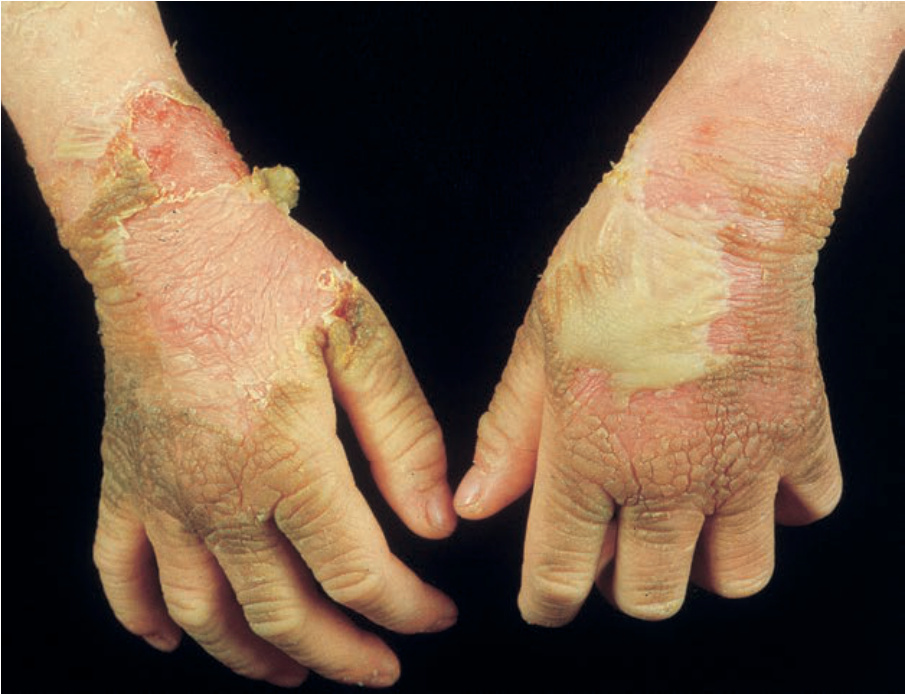
FIGURE 4-10 • Epidermolytic hyperkeratosis: arms and hands Mountain range-like hyperkeratosis of the dorsum of hands with blistering that results in erosions and shedding of large sheets of keratin.
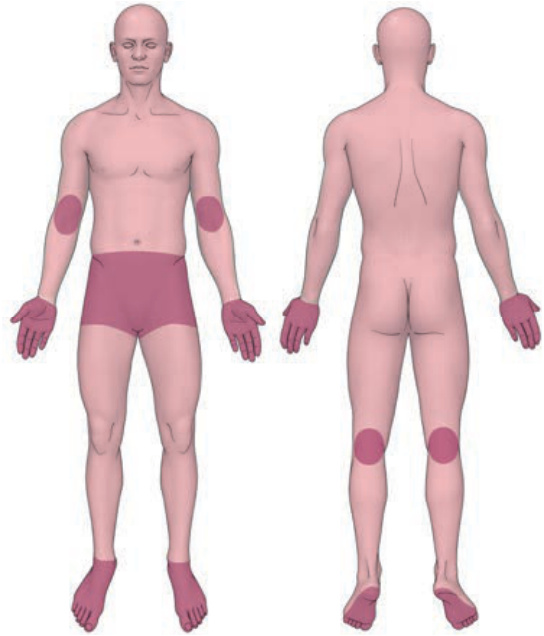
FIGURE 4-11 • Distribution of epidermolytic hyperkeratosis.