INHERITED KERATODERMAS OF PALMS AND SOLES
INHERITED KERATODERMAS OF PALMS AND SOLES ICD-10: Q82.2
• Palmoplantar keratodermas (PPK) are a large and diverse group of keratinization disorders.
• Characterized by excessive epidermal thickening of palms and soles. Other skin and organ involvement can occasionally occur.
• Inherited or acquired.
• Involvement can be diffuse (Fig. 4-17), punctate (Fig. 4-18), striate (Fig. 4-19), and focal PPK (callus-like circumscribed hyperkeratoses).
• Histopathologic distinction is made between epidermolytic and nonepidermolytic PPKs.
• Symptoms vary from inconvenience to functional disability. Plantar pain in focal PPK and hyperhidrosis may be debilitating.
• PPK do not improve with age, and often persists through life.
• Management: Physical debridement, topical keratolytic agents, systemic acitretin, or isotretinoin may be associated with increased sensitivity, difficulties with normal work and walking, particularly in the epidermolytic forms of PKK.
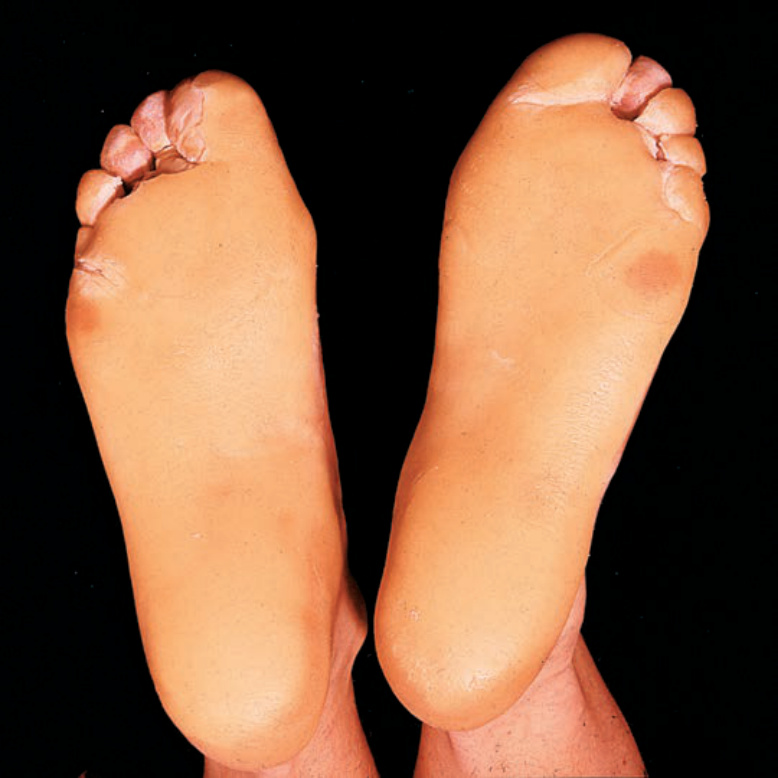
FIGURE 4-17 • Plantar keratoderma, diffuse type Yellow waxy diffuse hyperkeratosis on both soles.
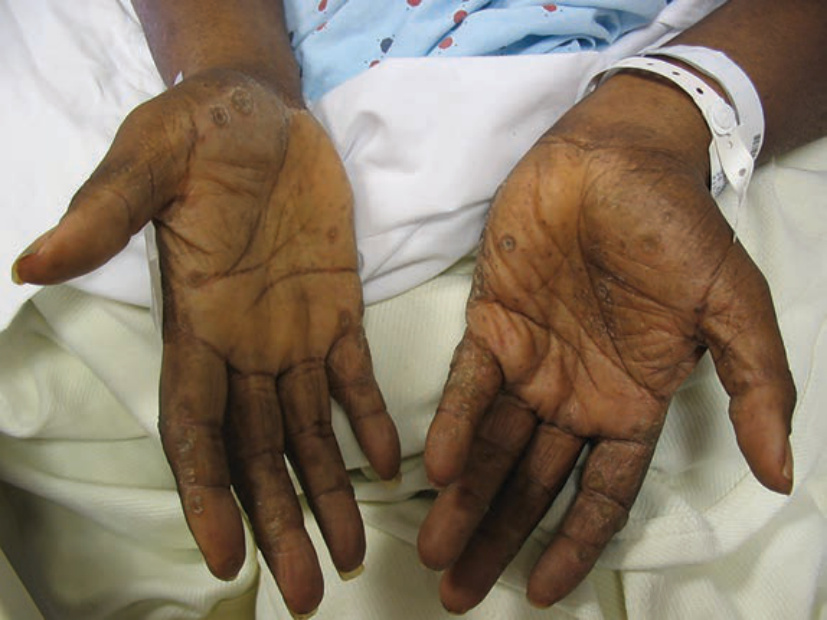
FIGURE 4-18 • Punctate palmar keratoderma Multiple small hyperkeratotic papules.
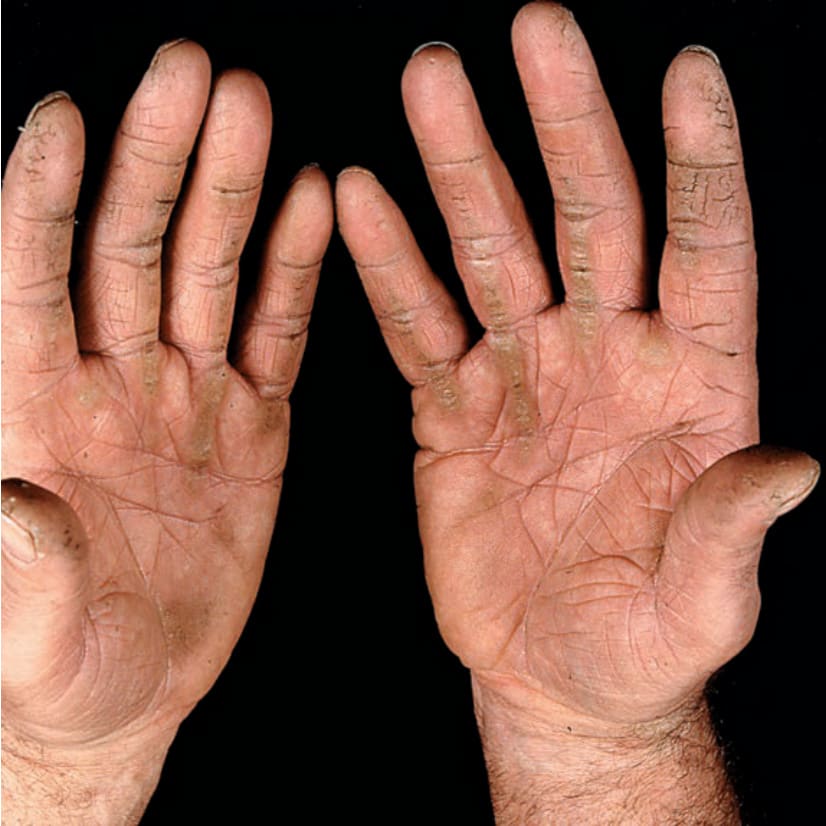
FIGURE 4-19 • Striate palmar keratoderma There are linear verrucous hyperkeratoses extending from the palm onto the fingers. Manual work aggravates these lesions, which can become fissured and painful. In focal palmar and plantar keratoderma, there are large hyperkeratoses on pressure sites of soles and palms that can become quite painful.