EPIDERMAL NEVUS
EPIDERMAL NEVUS ICD-10: D23.L86
• A developmental (hamartomatous) disorder characterized by hyperplasia of epidermal structures (epidermis and adnexa). There are no melanocytic nevus cells.
• Usually present at birth or occurs in infancy.
• Lesions are skin-colored, brown, or grayish-brown (Fig. 9-46) and are composed of closely set verrucous papules, well circumscribed; they are often in a linear arrangement—especially on the leg—or they may appear in Blaschko lines on the trunk. Management is difficult, but surgery and laser may be considered.
• Linear lesions can exhibit erythema, scaling, and crusting, and are then called inflammatory linear verrucous epidermal nevus (ILVEN). The lesions gradually enlarge and become stable in adolescence.
• Extensive epidermal nevi (epidermal nevus syndrome) may be multisystem disorders and may be associated with developmental abnormalities (bone cysts, hyperplasia of bone, scoliosis, spina bifida, and kyphosis), vitamin D-resistant rickets, and neurologic problems (mental retardation, seizures, cortical atrophy, and hydrocephalus). These patients require a complete examination, including the eyes (cataracts, optic nerve hypoplasia), and cardiac studies to rule out aneurysms or patent ductus arteriosus.
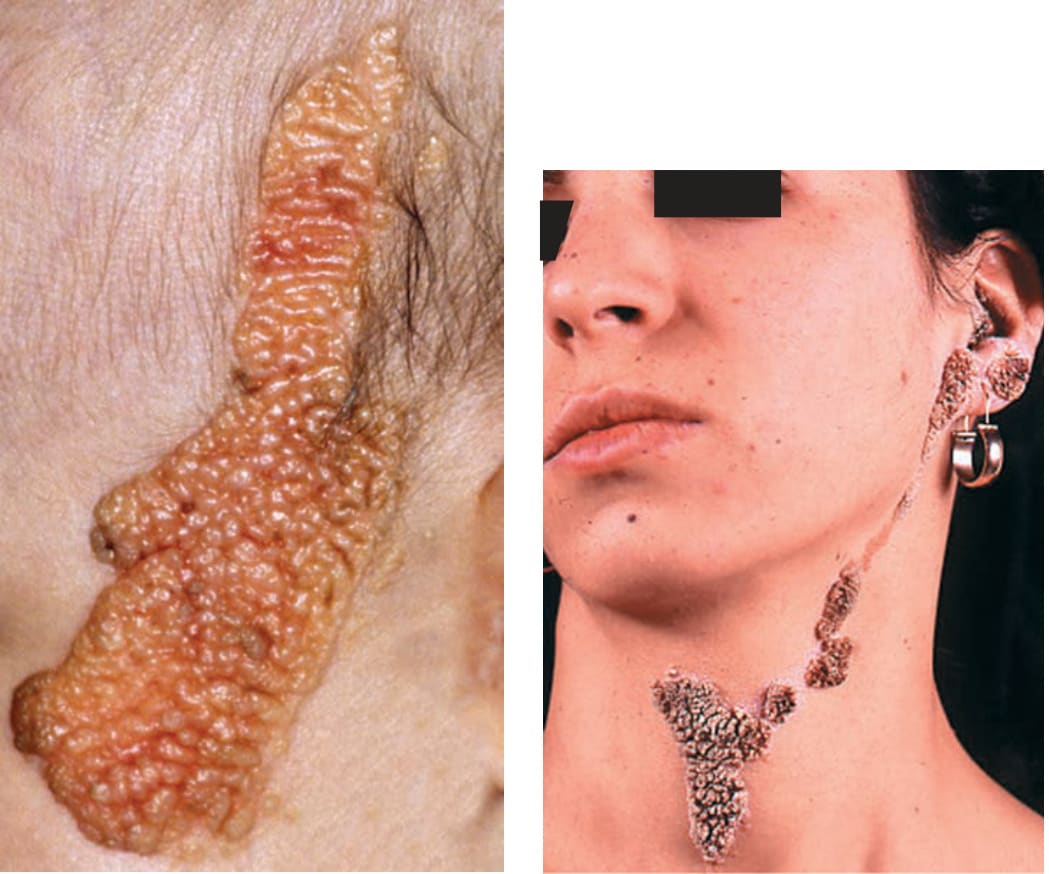
FIGURE 9-45 • Nevus sebaceous In a baby an elevated plaque of orange color and pebbly surface in the preauricular region. Note that the lesion is hairless on the scalp.
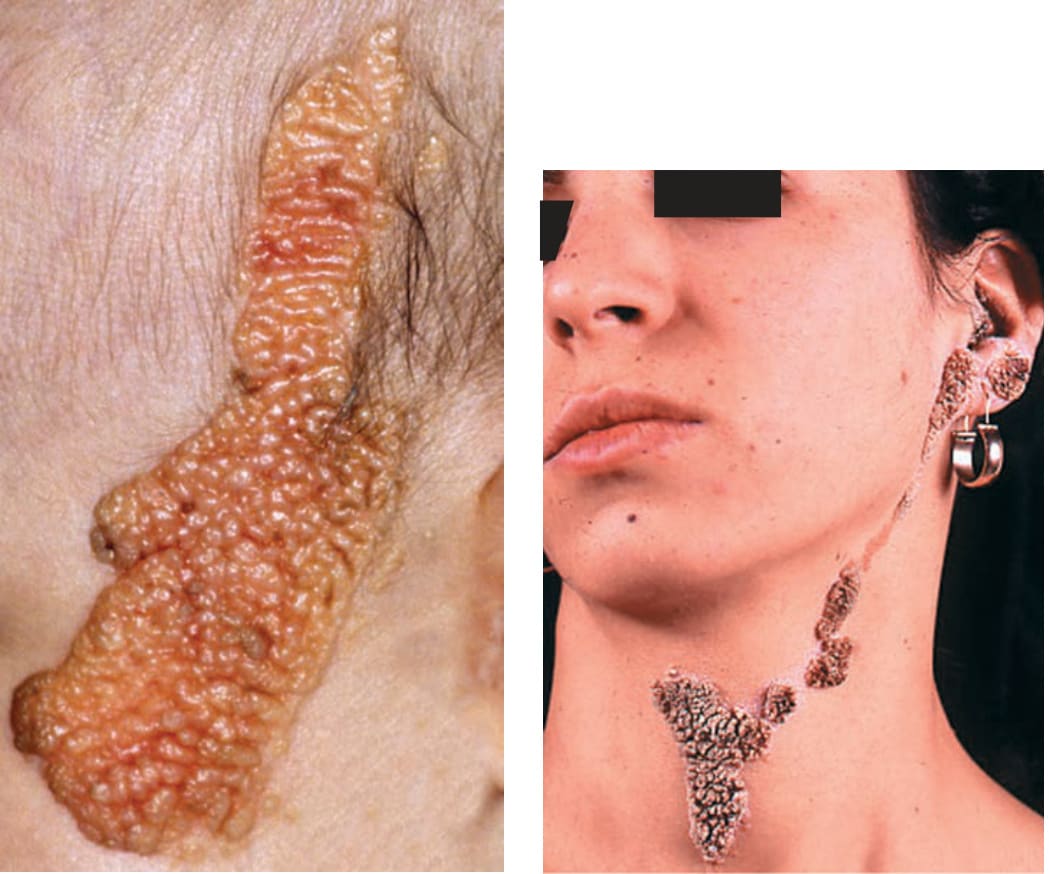
FIGURE 9-46 • Epidermal nevus A grayish irregular plaque with a verrucous surface on the ear extending linearly down to the neck.