DRUG-/CHEMICAL-INDUCED PHOTOSENSITIVITY
DRUG-/CHEMICAL-INDUCED PHOTOSENSITIVITY ICD-10: L56.0
• Interaction of UVR with a chemical or drug within the skin.
• Two mechanisms: Phototoxic reactions, which are photochemical reactions and photoallergic reactions, where a photoallergen is formed that initiates an immunologic response and manifests in skin as a type IV immunologic reaction.
• The difference between phototoxic and photoallergic eruptions is that the former manifests like an irritant (toxic) contact dermatitis or sunburn and the latter like an allergic eczematous contact dermatitis (see Table 10-3).
Phototoxicity Photoallergy
Clinical presentation Exaggerated sunburn reaction: erythema, edema, vesicles, and bullae; burning, stinging; frequently resolves with hyperpigmentation
Eczematous lesions; usually pruritic
Histologic features Eosinophilic keratinocytes, epidermal necrosis, dermal edema, sparse dermal infiltrate of lymphocytes, macrophages, and neutrophils
Spongiotic dermatitis, dermal lymphohistiocytic infiltrate
Pathophysiology Direct tissue injury Type IV delayed hypersensitivity response
Occurrence after first exposure Yes No
Onset after exposure Minutes to hours 24–48 hours
Dose of agent needed for reaction Large Small
Cross-reactivity with other agents None Common
Diagnosis
Topical agent Clinical Photopatch tests
Systemic agent Clinical + phototests Clinical + phototests; possibly photopatch tests
Source: Reproduced with permission from Kang S, Amagai M, Bruckner AL, Enk AH, Margolis DJ, McMichael AJ, Orringer JS, eds. Fitzpatrick’s Dermatology. 9th ed. New York, NY: McGraw Hill; 2019, Table 97-1.
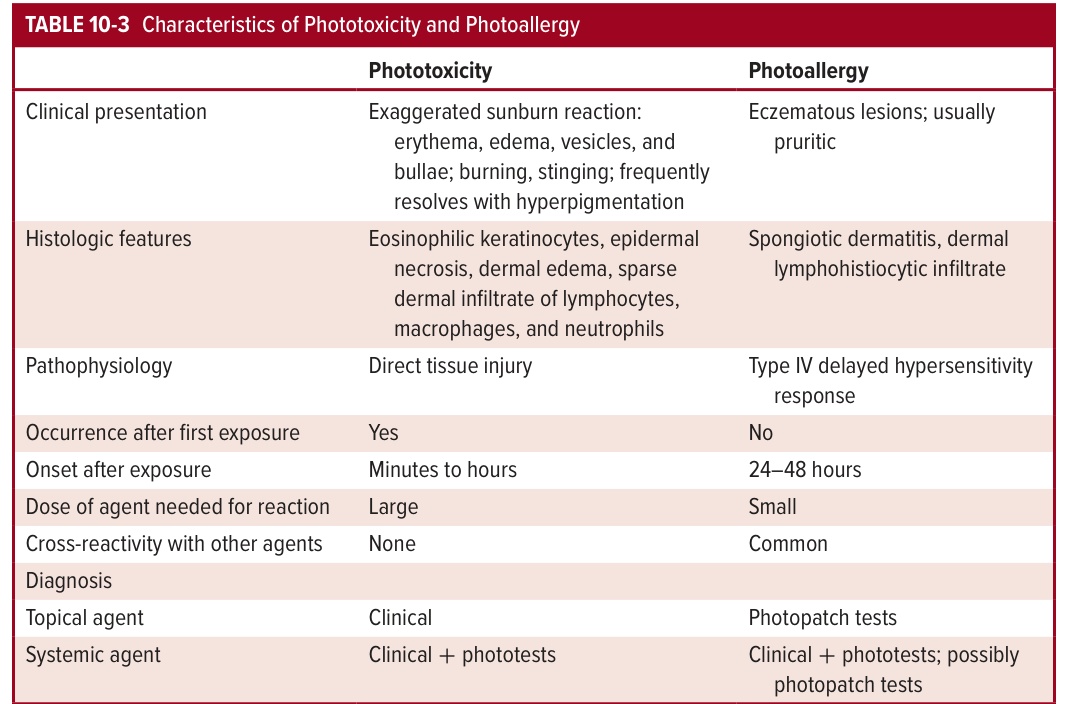
TABLE 10-3 Characteristics of Phototoxicity and Photoallergy