PHYTOPHOTODERMATITIS (PPD)
PHYTOPHOTODERMATITIS (PPD) ICD-10: L56.22
• An inflammation of the skin caused by contact with certain plants during recreational or occupational exposure to sunlight (plant + light = dermatitis).
• The inflammatory response is a phototoxic reaction to photosensitizing chemicals in several plant families.
• Common types of PPD are caused by exposure to limes, celery, and meadow grass.
• Synonyms : Berloque dermatitis, lime dermatitis.
EPIDEMIOLOGY AND ETIOLOGY
Common. Usually in spring and summer or all year in tropical climates. RACE All skin colors; dark-skinned persons may develop only spotty dark pigmentation without erythema or bullous lesions. OCCUPATION Celery pickers, carrot processors, gardeners if exposed to carrot greens or to “gas plant” (Dictamnus albus), and bartenders (lime juice) who are exposed to sun in outside bars. Nonoccupational: Housewives and users of perfumes containing oil of bergamot; persons walking and children playing in meadows develop PPD on the legs; meadow grass contains agrimony. ETIOLOGY Phototoxic reaction caused by photoactive furocoumarins (psoralens) contained in the plants.
CLINICAL MANIFESTATION
The patient gives a history of exposure to certain plants (lime, lemon, wild parsley, celery, giant hogweed, parsnips, carrot greens, and figs). Use of perfumes containing oil
of bergamot (which contains bergapten, 5-methoxypsoralen) may develop streaks of pigmentation only in areas where the perfume was applied. This is called berloque dermatitis (French: berloque, “pendant”). SKIN SYMPTOMS Smarting, sensation of sunburn, pain, and later pruritus. SKIN LESIONS Acute: Erythema, edema, vesicles, and bullae (Fig. 10-4). Lesions may appear pseudopapular before vesicles are evident (Fig. 10-5). Often bizarre streaks and artificial patterns (Fig. 10-5). On the sites of contact, especially the arms, legs, and face. Residual hyperpigmentation in bizarre streaks (berloque dermatitis) (Fig. 10-6).
DIAGNOSIS AND DIFFERENTIAL DIAGNOSIS
By recognition of pattern and careful history. Differential diagnosis is primarily acute irritant contact dermatitis, with streaky pattern. Poison ivy dermatitis (see Fig. 2-8), but this is eczematous.
COURSE
May be an important occupational problem, as in celery pickers. The acute eruption has a short life and fades spontaneously, but the pigmentation may last for many weeks.
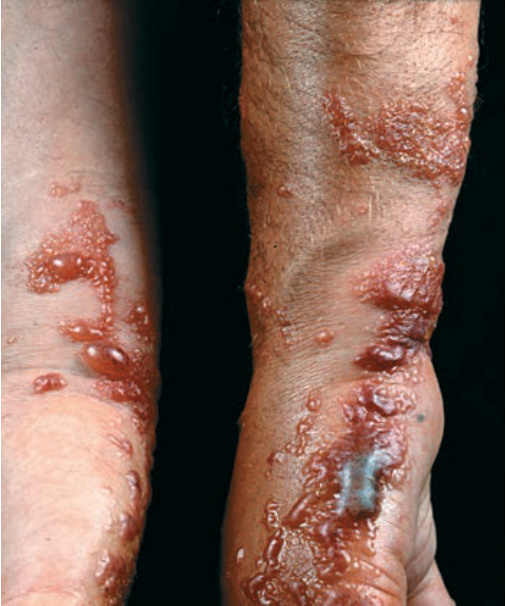
FIGURE 10-4 • Phytophotodermatitis (plant + light): acute with blisters These bullae were the result of exposure to umbelliferae and the sun. This 50-year-old housewife was weeding her garden on a sunny day. Umbelliferae contain bergapten (5-methoxypsoralen), which is a potent topical phototoxic chemical.
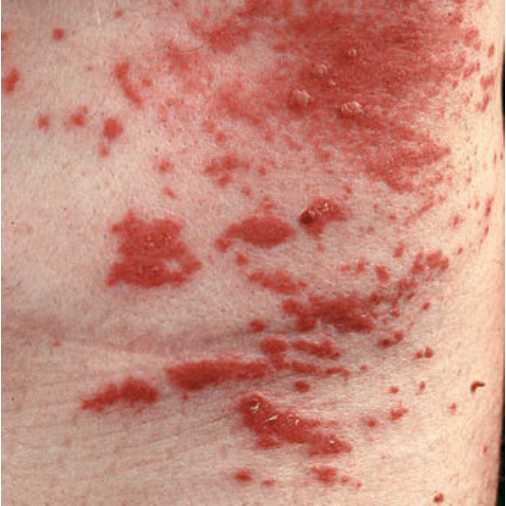
FIGURE 10-5 • Phytophotodermatitis In a 48-year-old man who was sunbathing in a meadow. Before vesicles and blisters arise erythematous lesions may appear raised, giving the false impression of being papular. Note streaky pattern.
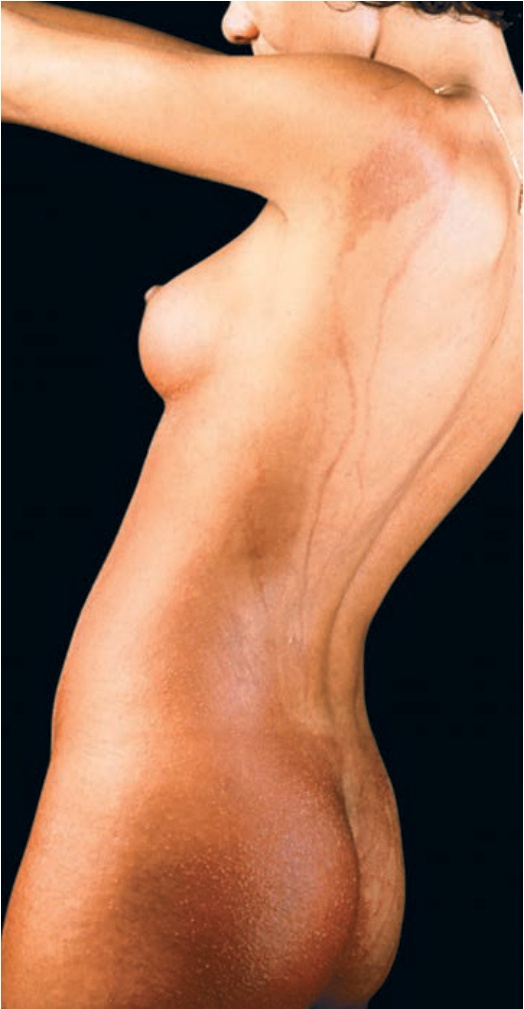
FIGURE 10-6 • Berloque dermatitis The patient had applied a fragrant bath oil to her shoulders and chest but showered only the front of her body before going into the sun. The bath oil contained oil of bergamot, and pigmentation is now noted where it trickled down from the shoulders to the buttocks. (Used with permission from Dr. Thomas Schwarz.)