MELASMA
MELASMA ICD-10: L81.1
• Melasma (Greek: “a black spot”) is an acquired light- or dark-brown hyperpigmentation that occurs in exposed areas, most often on the face, and results from exposure to sunlight.
• It may be associated with pregnancy, ingestion of contraceptive hormones, or possibly with certain medications such as diphenylhydantoin, or it may be idiopathic.
• Very common, especially among persons with constitutive brown skin taking contraceptive pills and living in sunny climates; 10% of patients are men.
• Macular hyperpigmentation mostly sharply defined in the malar and frontal areas of the face (Fig. 13-9). Usually uniform but also blotchy.
• Management: Commercially available preparations include hydroquinone 3% solution and 4% cream; azelaic acid 20% cream; and a combination of fluocinolone 0.01%, hydroquinone 4%, and tretinoin 0.05%. Hydroquinone 4% cream can be compounded with 0.05% tretinoin cream or glycolic acid by the pharmacist. Under no circumstances should MEH or the other ethers of hydroquinone (monomethyl or monoethyl) be used in the treatment of melasma because these drugs can lead to a permanent loss of melanocytes with the development of a disfiguring spotty leukoderma.
• Prevention: Opaque sun blocks.
• Synonyms: Chloasma (Greek: “a green spot”), mask of pregnancy.
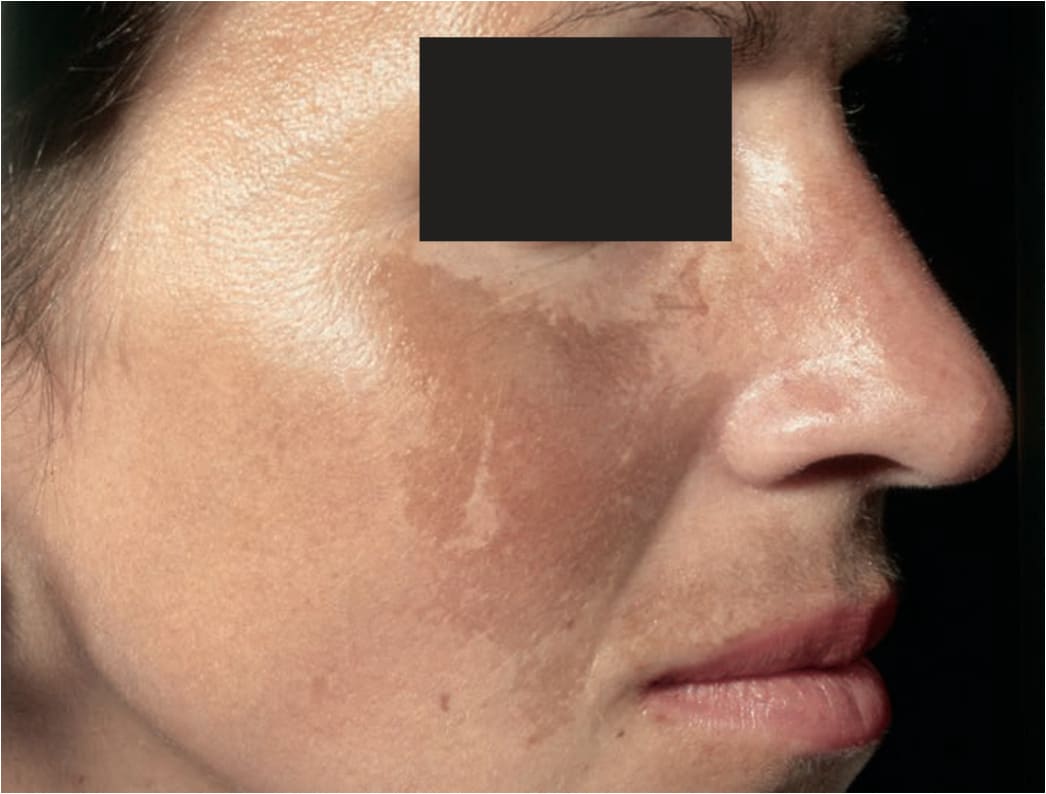
FIGURE 13-9 • Melasma Well-demarcated, hyperpigmented macules are seen on the cheek, nose, and upper lip.