ADDISON DISEASE
ADDISON DISEASE ICD-10: E27.1
• Addison disease is a syndrome resulting from adrenocortical insufficiency.
• It is insidious and is characterized by progressive generalized brown hyperpigmentation, slowly progressive weakness, fatigue, anorexia, nausea, and, frequently, GI symptoms (vomiting and diarrhea).
• Suggestive laboratory changes include low serum sodium, high serum potassium, and elevation of the blood urea nitrogen. The diagnosis is confirmed by specific tests of adrenal insufficiency.
• Skin: The patient may appear completely normal except for a generalized brown hyperpigmentation: (1) In areas where pigmentation normally occurs either habitually or UV induced such as around the eyes, face, and dorsa of the hands (Fig. 15-8A), nipples, in the linea nigra (abdomen), axillae, and anogenital areas in males and females. (2) In new areas: creases of palms (Fig. 15-8B), oral mucosa, (Fig. 15-8C) and bony prominences. Also in new scars following surgery.
• This disease should be managed by an endocrinologist.
A B
C
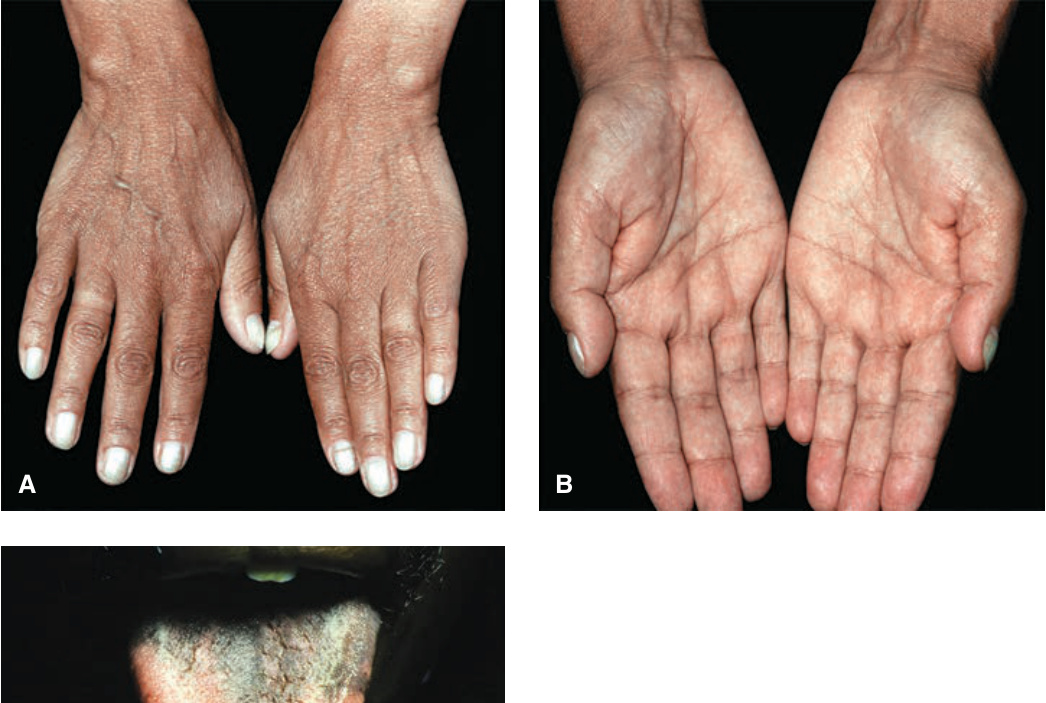
FIGURE 15-8 • Addison disease (A) Hyperpigmentation representing an accentuation of normal pigmentation of the hands of a patient with Addison disease. (B) Note accentuated pigmentation in the palmar creases. (C) Hyperpigmentation of the tongue in a patient with recently diagnosed Addison disease.