XANTHOMAS
XANTHOMAS ICD-10: E78.280
• Cutaneous xanthomas are yellow-brown, pinkish, or orange macules, papules, plaques, nodules, or infiltrations in tendons.
• Histologically, there are accumulations of xanthoma cells—macrophages containing droplets of lipids.
• Xanthomas may be symptoms of a general metabolic disease, a generalized histiocytosis, or a local fat phagocytosing storage process.
• The classification of metabolic xanthomas is based on this principle: (1) xanthomas caused by hyperlipidemia and (2) normolipidemic xanthomas.
• The cause of xanthomas in the first group may be a primary hyperlipidemia, mostly genetically determined (Table 15-1), or secondary hyperlipidemia, associated with certain internal diseases such as biliary cirrhosis, diabetes mellitus, chronic renal failure, alcoholism, hyperthyroidism, and monoclonal gammopathy, or with intake of certain drugs such as beta-blockers and estrogens.
• Some of the xanthomas are associated with high-plasma low-density lipoprotein (LDL)-cholesterol levels, and therefore with a serious risk of atheromatosis and myocardial infarction. For this reason, laboratory investigation of plasma lipid levels is always necessary. In some cases, an apoprotein deficiency is present.
• Table 15-2 shows correlations of clinical xanthoma type and lipoprotein disturbances.
Frederickson Classification Lipid Profile
Type
I Familial lipoprotein lipase deficiency (hyperchylomicronemia, hypertriglyceridemia) TG++, C normal, CM++, HDL−/normal
IIa Familial hypercholesterolemia TG normal, C+, LDL+
IIb Familial combined hyperlipidemia TG+, C+, LDL+, VLDL+
III Familial dysbetalipidemia (remnant particle disease) TG+, C+, IDL+, CM remnants+
IV Familial hypertriglyceridemia TG+, C normal/+, LDL++, VLDL++
V Familial combined hypertriglyceridemia TG+, C+, VLDL++, CM++
C, cholesterol; CM, chylomicrons; HDL, high-density lipoproteins; IDL, intermediate-density lipoproteins; LDL, low-density lipoproteins; TG, triglycerides; VLDL, very low density lipoproteins; +, raised; −, lowered.
Type of Xanthoma Genetic Disorders Secondary Disorders
Eruptive Familial lipoprotein lipase deficiency Apo-C2 deficiency Apo-AI and apo-AI/CIII deficiency Familial hypertriglyceridemia Familial hypertriglyceridemia with chylomicronemia
Tuberous Familial hypercholesterolemia Familial dysbetalipoproteinemia Phytosterolemia
Tendinous Familial hypercholesterolemia Familial defective apo-B Familial dysbetalipoproteinemia Phytosterolemia Cerebrotendinous xanthomatosis
Planar
Palmar FD Homozygous apo-AI deficiency
Obesity Cholestasis Diabetes Medications: retinoids, estrogen therapy, protease inhibitors
Monoclonal gammopathies Multiple myeloma Leukemia
Intertriginous Familial homozygous hypercholesterolemia Cholestasis
Diffuse Monoclonal gammopathies, cholestasis
Xanthelasma FH FD Monoclonal gammopathies
Other
Corneal arcus Familial hypercholesterolemia
Tonsillar Tangier disease
Apo, apolipoprotein. Source: Reproduced with permission from Schaefer EJ, Santos RD. Xanthomas and lipoprotein disorders. In: Goldsmith LA, Katz SI, Gilchrest BA, et al., eds. Fitzpatrick’s Dermatology in General Medicine. 8th ed. New York, NY: McGraw-Hill; 2012, p. 1601.
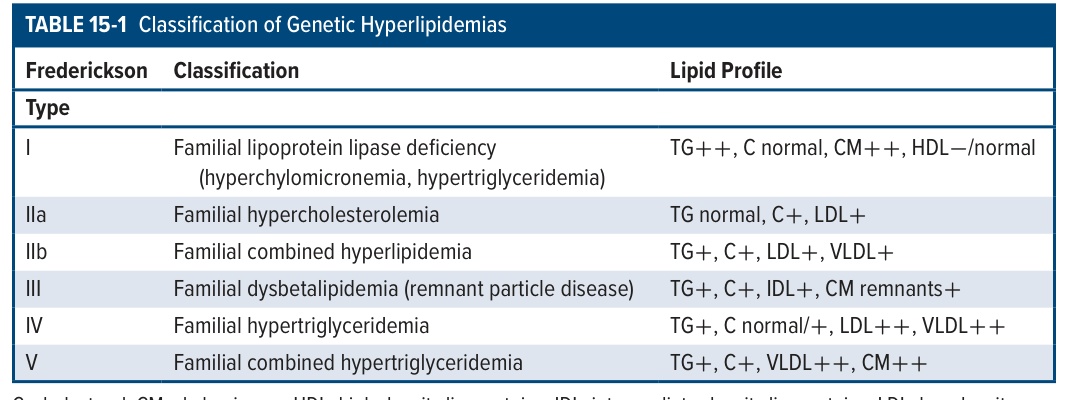
TABLE 15-1 Classification of Genetic Hyperlipidemias
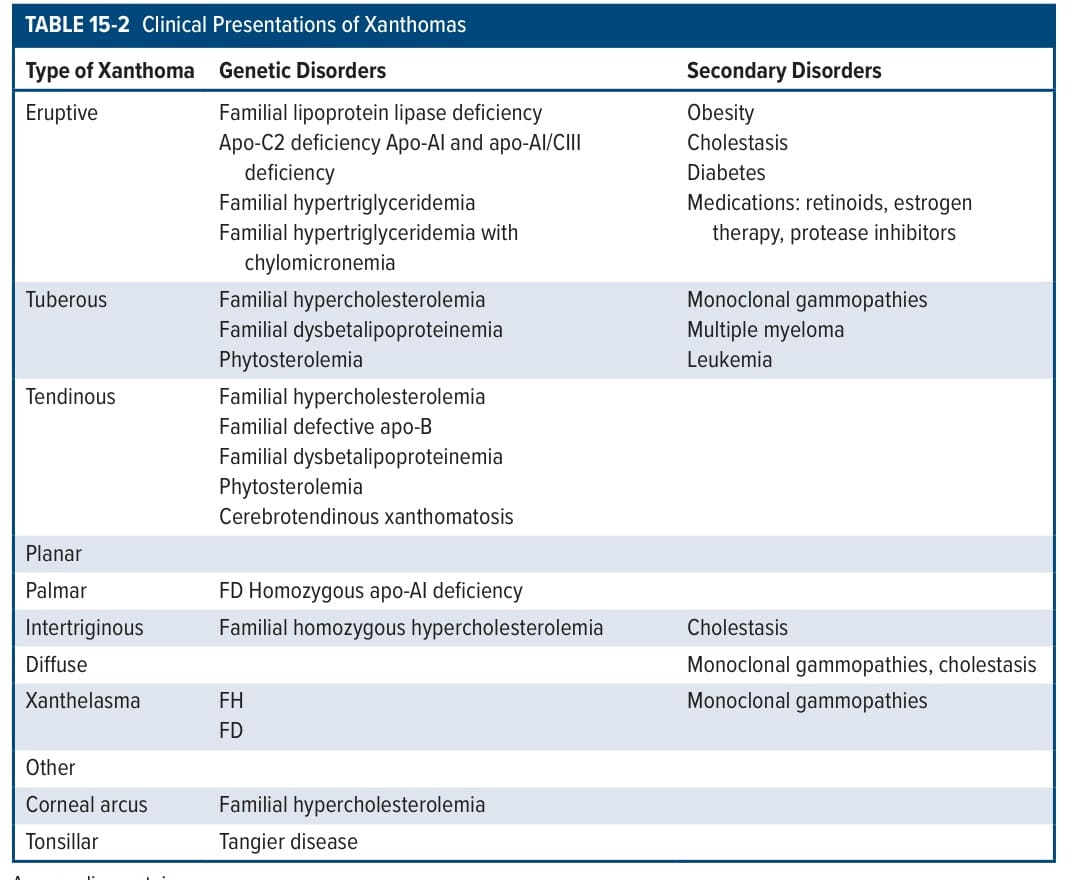
TABLE 15-2 Clinical Presentations of Xanthomas