GOUT
GOUT ICD-10: M10
• A clinical syndrome occurring in a group of diseases characterized by the deposition of monosodium urate crystals in synovial fluid and joints.
• Acute gouty arthritis usually occurs in middle age and usually affects a single joint in the lower extremities, usually the first metatarsophalangeal joint. It can also affect fingers (Fig. 15-19A).
• Intercritical gout describes the interval between attacks of gout. With time, attacks tend to be polyarticular.
• In chronic tophaceous gout, patients rarely have asymptomatic periods. Urate crystals are found in soft tissues, cartilage (Fig. 15-19B), and tendons.
• Gout may occur with and without hyperuricemia, renal disease, and nephrolithiasis.
A
B FIGURE 15-19 • Acute gouty arthritis (A) Affecting the distal interphalangeal joint of the fifth digit. (B) Gouty tophi on helix.
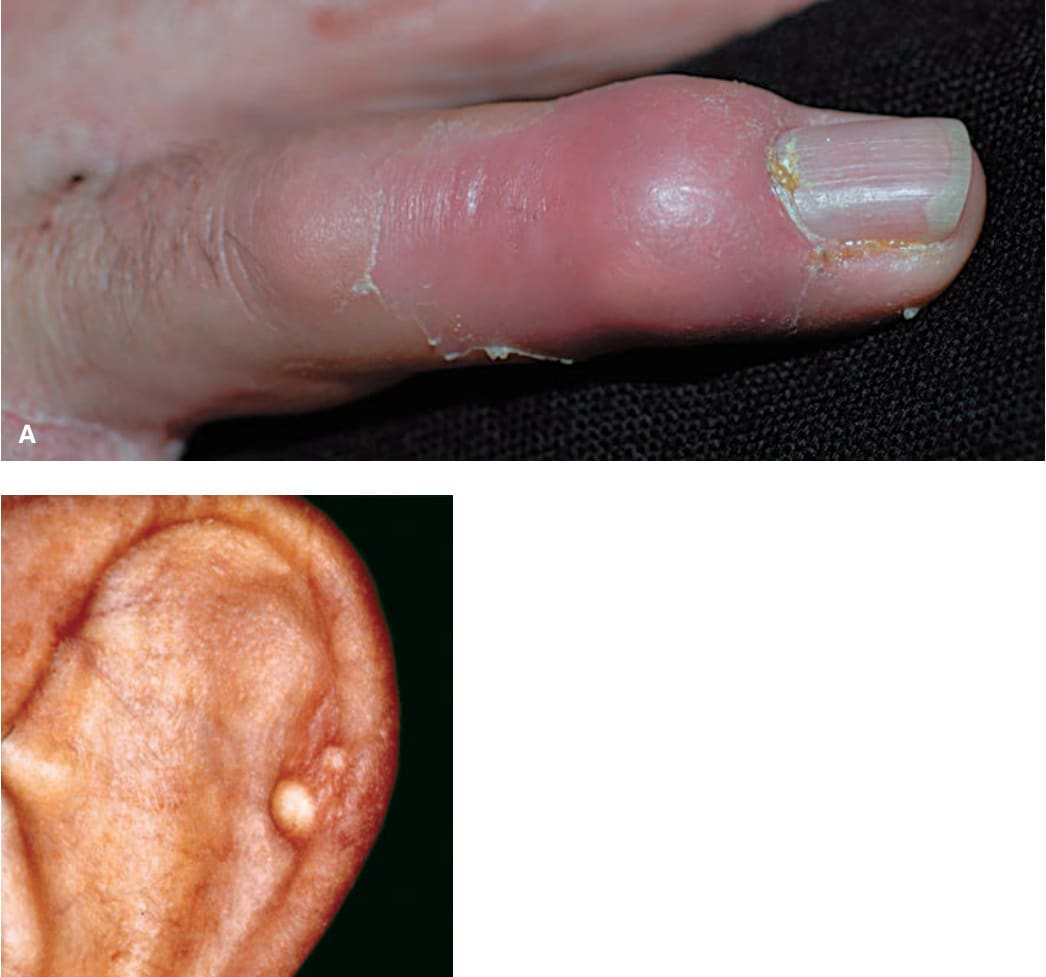
圖 15-19