THROMBOANGIITIS OBLITERANS (TO)
THROMBOANGIITIS OBLITERANS (TO) ICD-10: I73.1
• A rare inflammatory occlusive disease of medium-sized and small arteries and veins.
• Predominantly in males, 20 to 40 years of age.
• Very strong association with smoking.
• An angiitis clinically indistinguishable from TO occurs in persons consuming cannabis.
• Clinical manifestations are cold sensitivity; ischemia: claudication of the leg, foot, arm, or hand.
• Peripheral cyanosis, ischemic ulcers, gangrene (Fig. 17-5), and superficial thrombophlebitis.
• Therapy: Smoking cessation, analgesics, wound care; antiplatelet agents, prostacyclins, pentoxifylline, angioplasty, sympathectomy, and amputation.
• Synonym: Buerger’s disease.
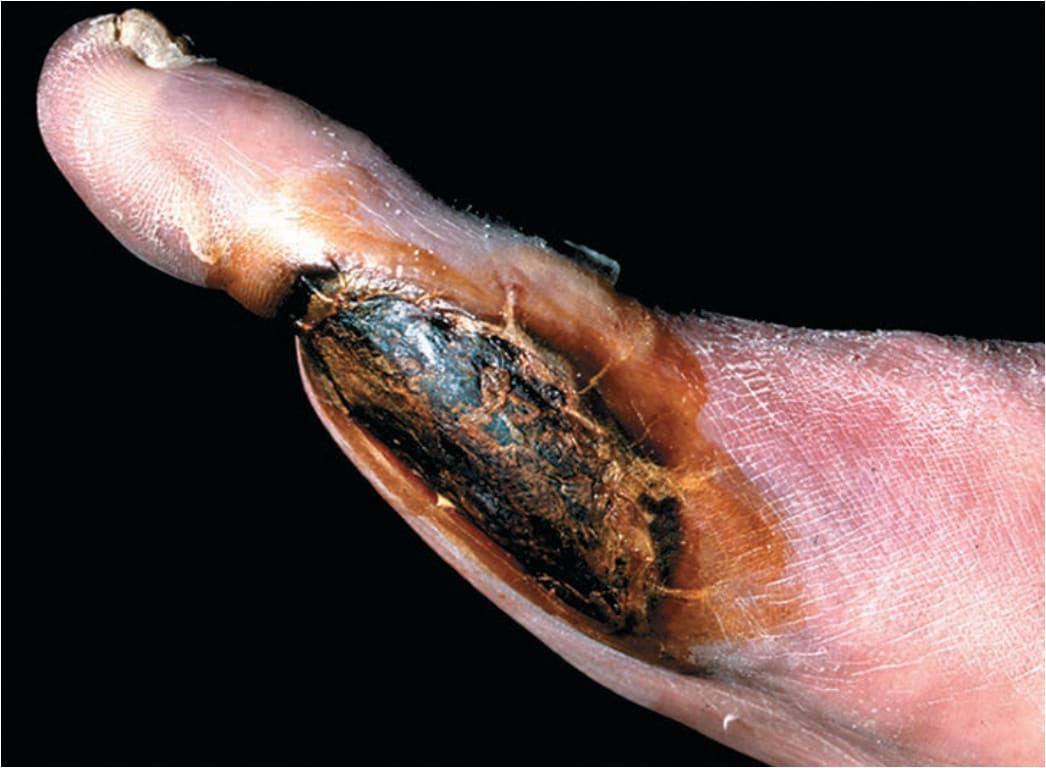
FIGURE 17-5 • Thromboangiitis obliterans Infarctive necrosis on the great toe of a 28-year-old man. The lesion is exquisitely painful. (The yellowish-brownish color is from iodine disinfection.)