LIVEDOID VASCULITIS (LV)
LIVEDOID VASCULITIS (LV) ICD-10: L95.0
• Livedoid Vasculitis (LV) is a thrombotic vasculopathy of dermal vessels confined to the lower extremities and starting mostly in the ankle region.
• A triad of livedo reticularis, atrophie blanche, and very painful, small punched-out ulcers that have a very poor tendency for healing (Fig. 17-15).
• Atrophie blanche in LV is clinically indistinguishable from that seen in CVI, except for varicose veins (compare Figs. 17-15 and 17-9). LV is a reaction pattern of the skin that often recurs in winter or summer (“livedo reticularis with winter and summer ulcerations”).
• Histologically, there are fibrin thrombi in small- and medium-sized dermal veins and arteries with wedge-shaped necrosis and hyalinization of the vessel walls (segmental hyalinizing vasculitis).
• LV may be idiopathic or may be associated with Sneddon syndrome (see Fig. 14-36), antiphospholipid antibody syndrome, or conditions of hypercoagulability or hyperviscosity.
• Treatment: Bed rest, analgesics, low-dose heparin, and platelet aggregation inhibitors. Pain can be relieved and healing accelerated by systemic glucocorticoids. Anabolic agents such as danazol and stanozolol have been anecdotally reported to be effective.
• Larger ulcers will have to be excised and grafted.
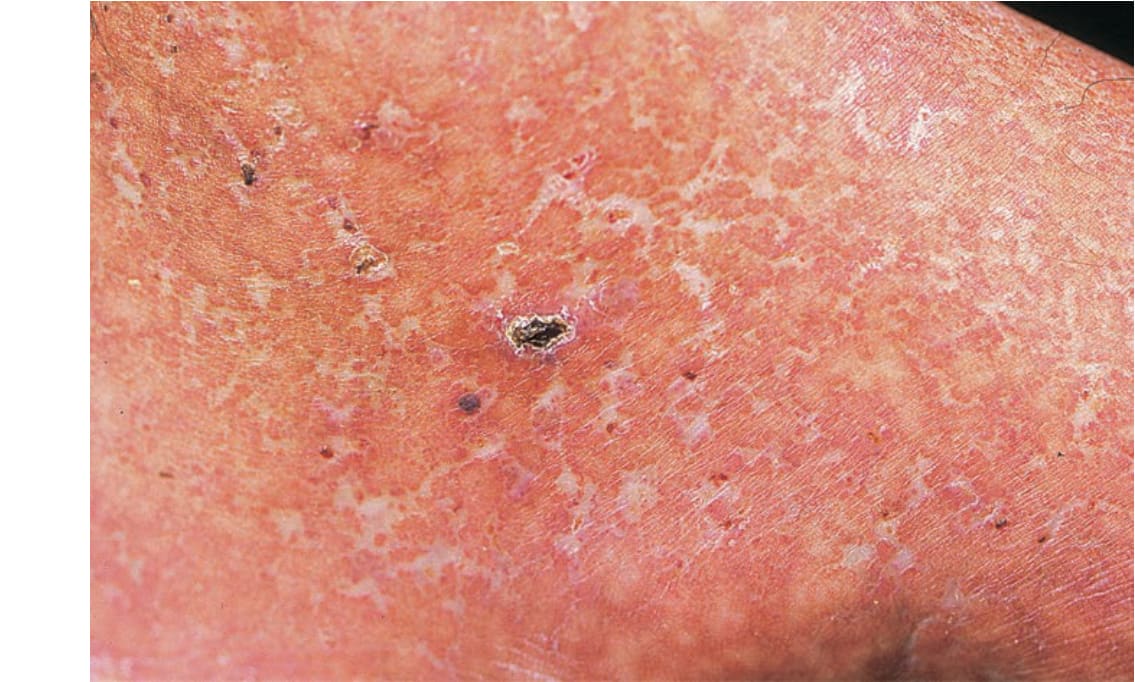
FIGURE 17-15 • Livedoid vasculitis This is characterized by the triad of livedo reticularis, atrophie blanche, and small, painful, and crusted ulcers. This is clinically indistinguishable from atrophie blanche seen in CVI except for the absence of varicose veins.