PEUTZ–JEGHERS SYNDROME
PEUTZ–JEGHERS SYNDROME ICD-10: Q85.8
• Peutz–Jeghers syndrome is a familial (autosomal dominant, spontaneous mutation in 40%) polyposis characterized by many small, pigmented brown macules (lentigines) on the lips, oral mucous membranes (brown to bluish black), and on the bridge of the nose, palms, and soles.
• Mutations in the Serine-Threonine Kinase 11 (STK11) gene on chromosome 19p13.3 are considered the major cause.
• Macules on the lips may disappear over time, but not the pigmentation of the mouth; therefore, the mouth pigmentation is the sine qua non for the diagnosis (Fig. 19-13).
• There are usually, but not always, multiple hamartomatous polyps in the small bowel, as well as in the large bowel and stomach, that cause abdominal symptoms such as pain, GI bleeding, and anemia.
• Although pigmented macules are congenital or develop in infancy and early childhood, polyps appear in late childhood or before the age of 30 years.
• Adenocarcinoma may develop in polyps, and there is an increased incidence of breast, ovarian, and pancreatic cancer.
• There is a normal life expectancy unless carcinoma develops in the GI tract. Prophylactic colectomy has been recommended for these patients.
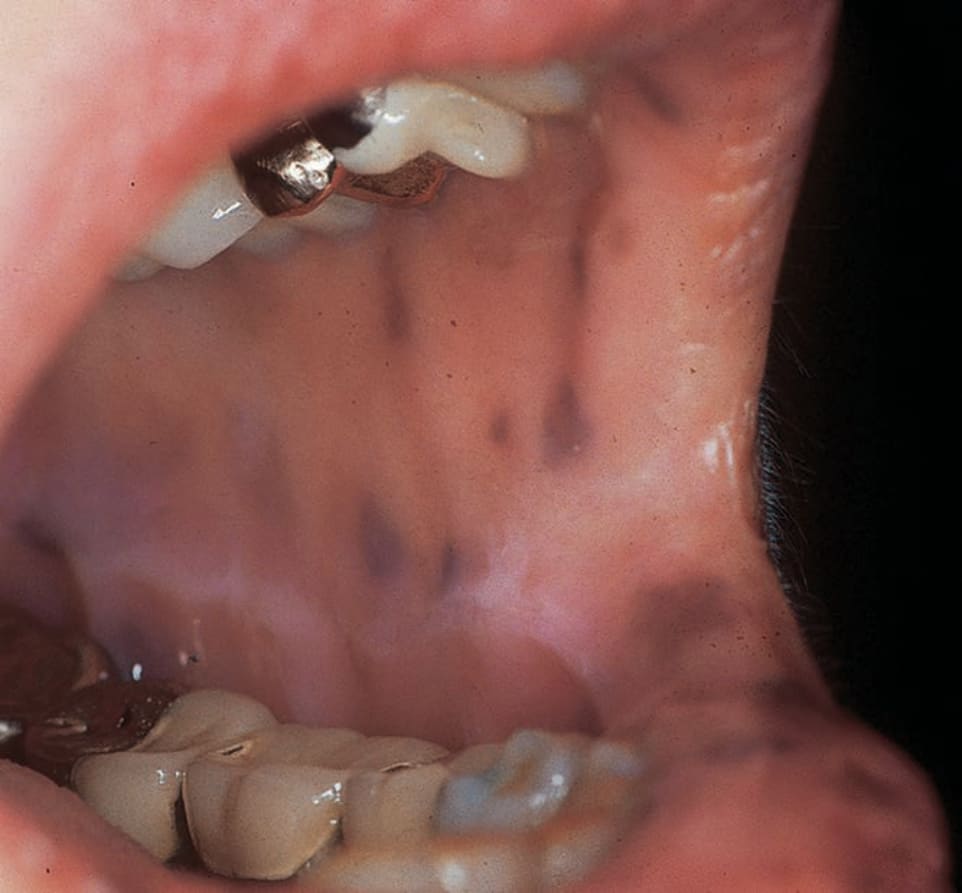
FIGURE 19-13 • Peutz–Jeghers syndrome Multiple, dark-brown lentigines on the vermilion border of the lip and the buccal mucosa. This patient had GI bleeding due to hamartomatous polyps in the small bowel.