CUTANEOUS B-CELL LYMPHOMA
CUTANEOUS B-CELL LYMPHOMA ICD-10: C85.1
• A clonal proliferation of B lymphocytes can be confined to the skin or more often is associated with systemic B-cell lymphoma. Rare. It comprises 20% of all cutaneous lymphomas.
• Mostly occurs in individuals >50 years.
• Crops of asymptomatic nodules and plaques, red to plum color (Fig. 21-15) with a smooth surface, firm, nontender, cutaneous, or subcutaneous.
• Primary cutaneous follicle center-cell lymphoma, primary cutaneous marginal zone lymphoma, primary cutaneous diffuse large B-cell lymphoma (leg type), and intravascular large B-cell lymphoma (not primarily cutaneous but affects skin), mantle cell lymphoma, lymphomatoid granulomatosis, chronic lymphocytic leukemia, and Burkitt lymphoma are special defined entities.
• Dermatopathology: Dense nodular or diffuse monomorphous infiltrates of lymphocytes usually separated from the epidermis by a zone of normal collagen (“grenz zone”). B cell-specific monoclonal antibody studies facilitate differentiation of cutaneous B-cell lymphoma from pseudolymphoma and CTCL and permit more accurate classification of the cell type. Most cases react with CD19, 20, 22, and 79A. Gene-typing studies confirm diagnosis with immunoglobulin gene rearrangement, usually IgH.
• Patients should be investigated thoroughly for nodal and extracutaneous disease; if found, bone marrow, lymph node, and peripheral blood studies will show morphologic, cytochemical, and immunologic features similar to those of the cutaneous infiltrates.
• Management: Consists of radiation therapy and surgery for localized lesions. No standard treatment is yet described for aggressive diffuse large cell lymphomas, leg type. Chemotherapy (R-CHOP) for systemic disease. Clinical trials are often recommended.
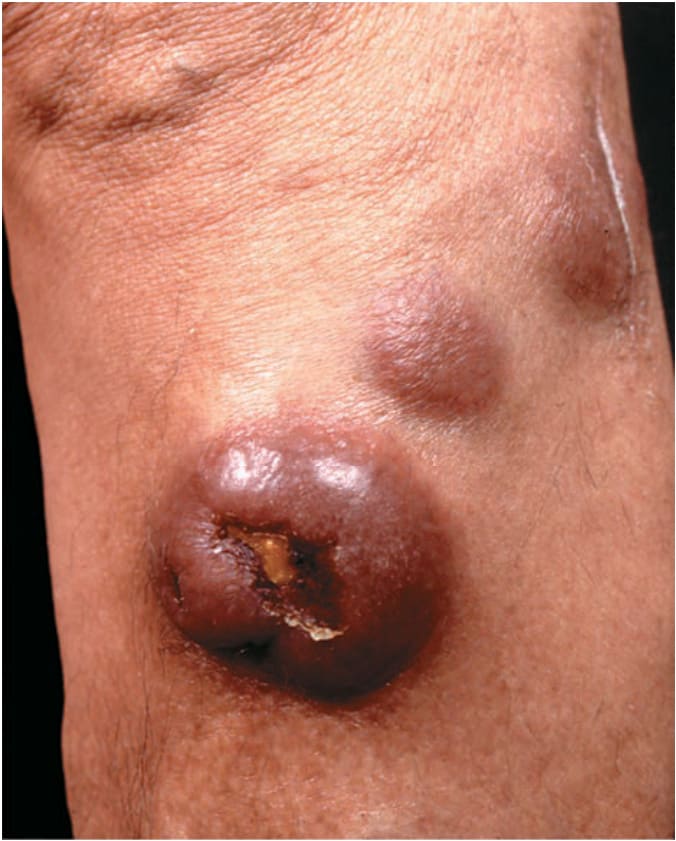
FIGURE 21-15 • Cutaneous B-cell lymphoma Smooth, cutaneous, and subcutaneous nodules on the lower leg. One is ulcerated. They were asymptomatic and firm and were the first signs of B-cell lymphoma.