PSEUDOPORPHYRIA
PSEUDOPORPHYRIA ICD-10: E80.25
• Pseudoporphyria is a condition that clinically presents with cutaneous manifestations of porphyria cutanea tarda (PCT) (see Section 10) without the characteristic abnormal porphyrin excretion.
• Drugs causing pseudoporphyria are naproxen, nabumetone, oxaprozin, diflunisal, celecoxib, tetracyclines, ketoprofen, mefenamic acid, tiaprofenic acid, nalidixic acid, amiodarone, and furosemide. The reaction can remain for several months after discontinuation of culprit medications.
• Develops on the dorsa of hands and feet with characteristic tense bullae that rupture and leave erosions (Fig. 23-11) and heal with scars and milia formation.
• It is characterized by subepidermal blistering with little or no dermal inflammation and, in contrast to true PCT, little or no deposition of immunoreactants around upper dermal blood vessels and capillary walls.
• A bullous dermatosis that is morphologically and histologically indistinguishable from pseudoporphyria also occurs in patients with chronic renal failure receiving maintenance hemodialysis (see Section 18).
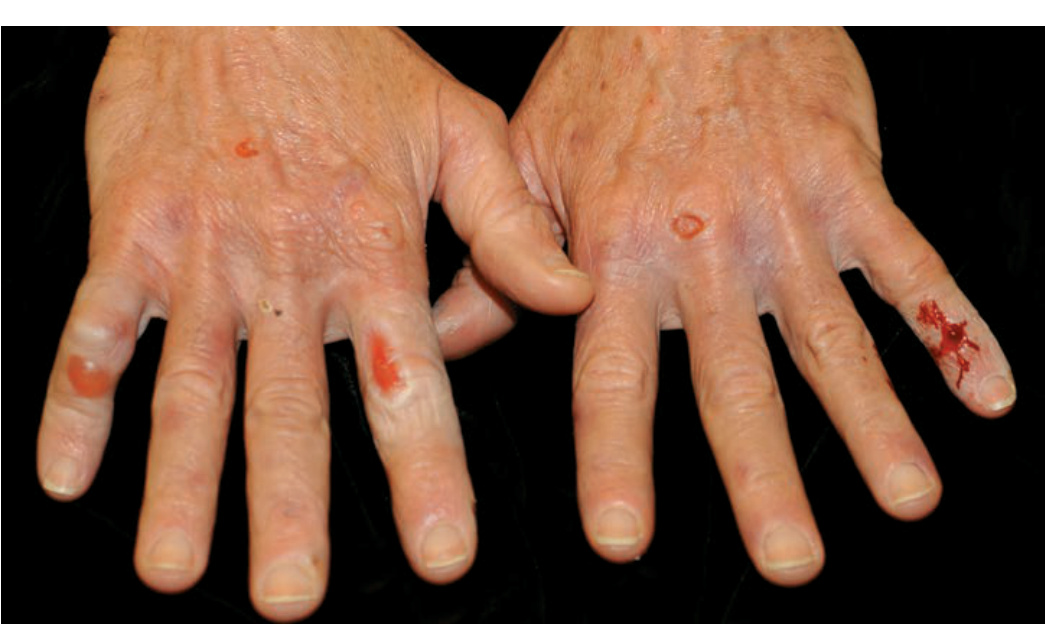
FIGURE 23-11 • Pseudoporphyria: nonsteroidal anti-inflammatory agents In this 20-year-old male, blisters appeared on the dorsa of both hands that led to erosions, crusting, and were clinically indistinguishable from porphyria cutanea tarda. However, there was no urinary fluorescence, and porphyrin studies were negative. The patient had taken an NSAID for arthritis and had impaired kidney function.