ACDR-RELATED NECROSIS
ACDR-RELATED NECROSIS ICD-10: T88.7
• Drugs can cause cutaneous necrosis when given orally or at injection sites.
• Warfarin-induced cutaneous necrosis is a rare reaction with onset between the third and fifth days of anticoagulation therapy with the warfarin derivatives, manifested by cutaneous infarction.
• Risk factors: Higher initial dosing, obesity, female sex; individuals with hereditary deficiency of protein C, protein S, or antithrombin III deficiency.
• Lesions vary with severity of reaction: Petechiae to ecchymoses to tender hemorrhagic infarcts to extensive necrosis, which can be well-demarcated, deep purple to black (Fig. 23-12). Distribution: Areas of abundant subcutaneous fat: breasts (Fig. 23-12), buttocks, abdomen, thighs, and calves; acral areas are spared.
• Differential diagnosis: Purpura fulminans (disseminated intravascular coagulation), hematoma/ecchymosis/necrotizing soft-tissue infection, vasculitis, or brown recluse spider bite.
• Heparin can cause cutaneous necrosis, usually at the site of the subcutaneous injection (Fig. 23-13).
• Interferon-α can cause necrosis and ulceration at injection sites, often in the lower abdominal panniculus or thighs (Fig. 23-14).
• Ergotamine-containing medications lead to acral gangrene; ergotamine-containing suppositories after prolonged use cause extremely painful anal and perianal black eschars which, after having been shed, leave deep painful ulcers (Fig. 23-15).
• Embolia cutis medicamentosa: Deep necrosis developing at the site of intramuscular injection of oily drugs inadvertently injected into an artery (Fig. 23-16).
• Necrosis also develops in obtunded or deeply sedated patients at pressure sites (Fig. 23-17).
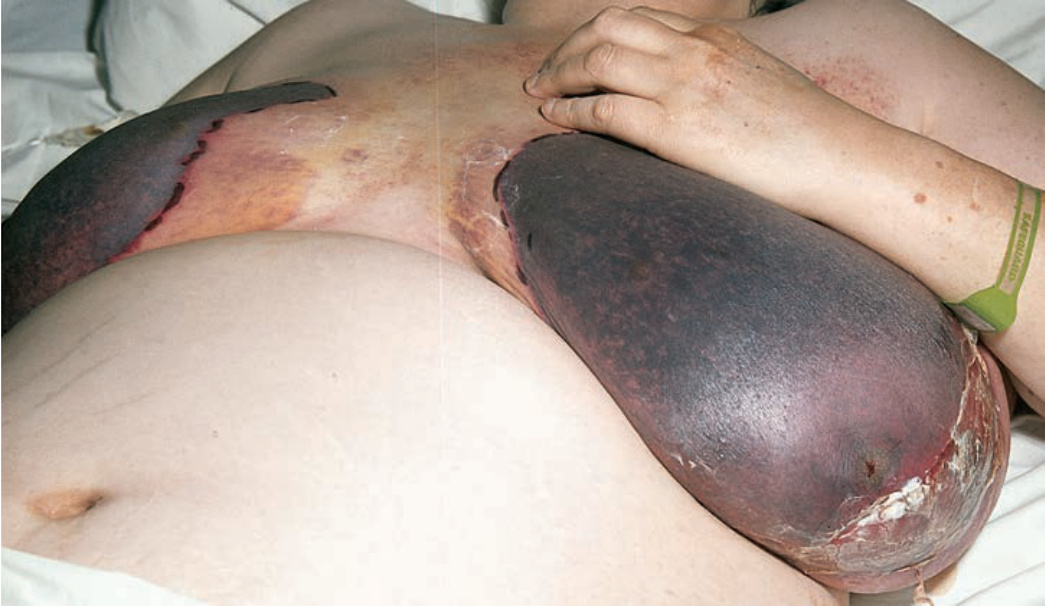
FIGURE 23-12 • ACDR-related cutaneous necrosis: warfarin Bilateral areas of cutaneous infarction with purple-toblack coloration of the breast surrounded by an area of erythema occurred on the fifth day of warfarin therapy.
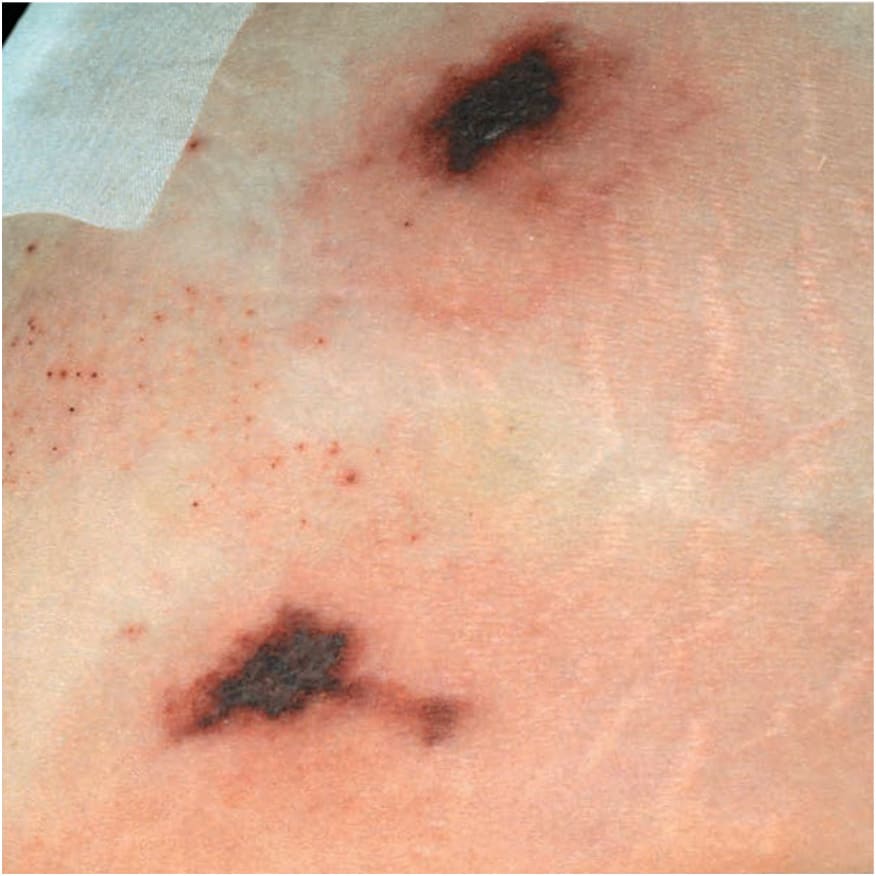
FIGURE 23-13 • ACDR-related cutaneous necrosis: heparin Two lesions of irregular dark-red erythema with central hemorrhagic necrosis on the abdomen occurring postoperatively in a female injected with heparin.
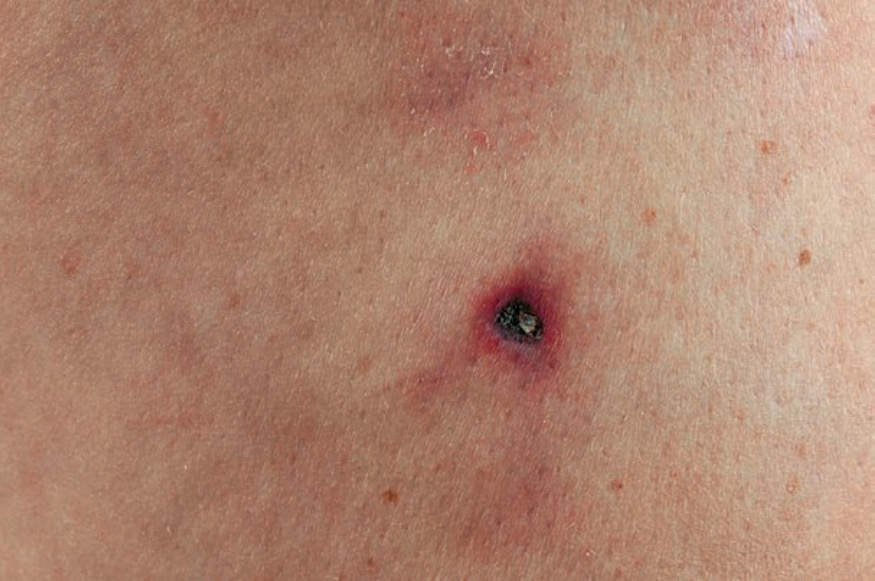
FIGURE 23-14 • ACDR-related cutaneous necrosis: interferon-α An ulcer on the thigh at the site of interferon injection.
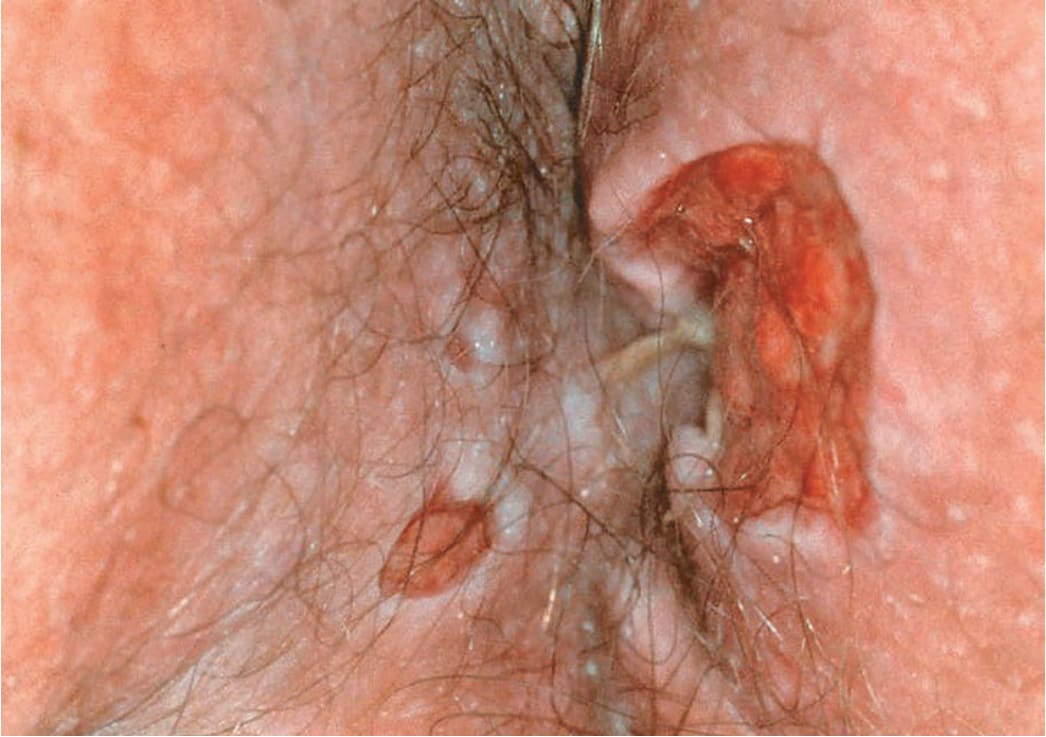
FIGURE 23-15 • ACDR-related cutaneous necrosis: ergotamine This 60-year-old male had used ergot-containing suppositories for pain relief over many months. Painful black necrosis followed by ulceration developed on the anus and perianally and extended into the rectum.
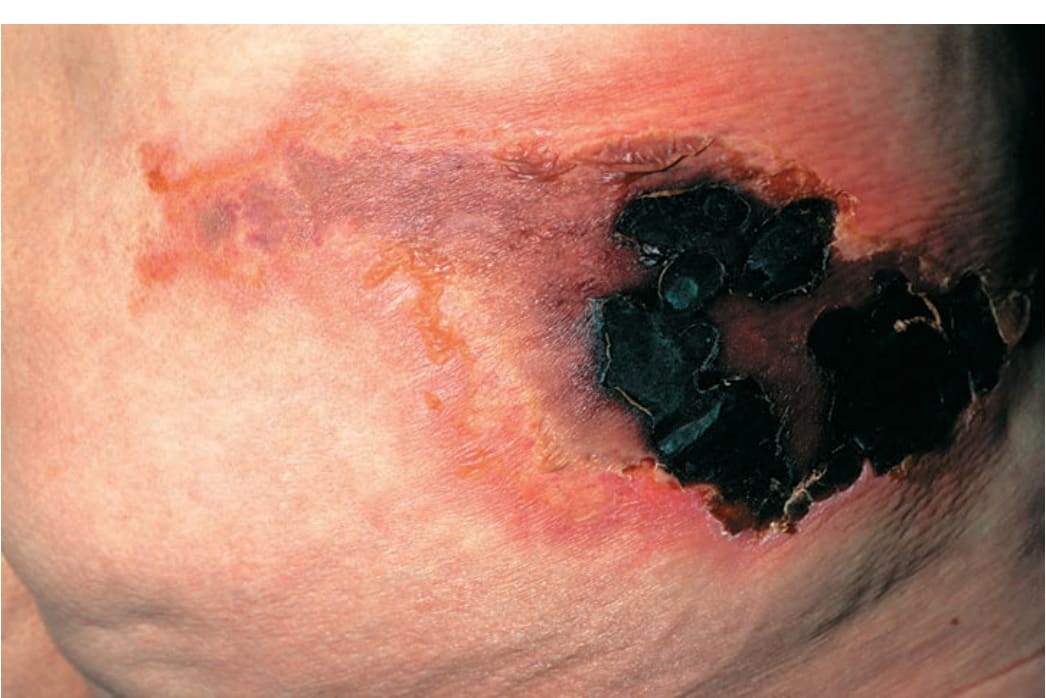
FIGURE 23-16 • ACDR-related necrosis following intramuscular injection Embolia cutis medicamentosa. The drug (an oily preparation of testosterone) had been inadvertently administered intra-arterially.
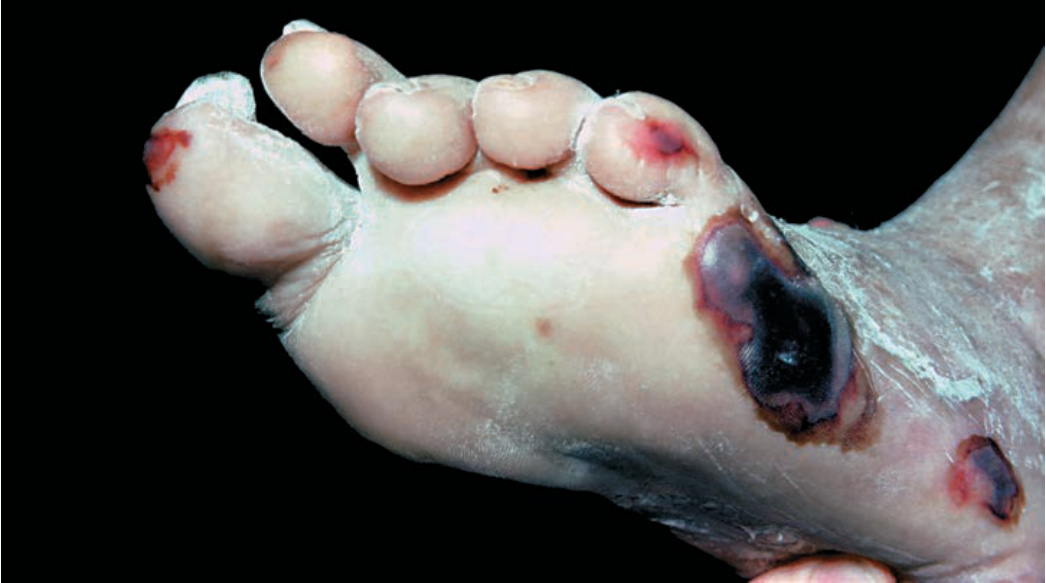
FIGURE 23-17 • ACDR-related necrosis with hemorrhagic blistering after an overdose of barbiturates This patient had attempted suicide.