LYMPHANGITIS
LYMPHANGITIS ICD-10: 189–1
• An inflammatory process involving the subcutaneous lymphatic channels.
• Etiology.
• Acute lymphangitis: GAS; S. aureus; other bacteria. Herpes simplex virus.
• Subacute to chronic nodular lymphangitis: Mycobacterium marinum, other NTM, Sporothrix schenckii, and N. brasiliensis.
CLINICAL MANIFESTATION
ACUTE LYMPHANGITIS Portal of entry: Break in skin, wound, S. aureus paronychia, and primary and herpes simplex infection. Pain and/or erythema proximal to break in skin. Red linear streaks and palpable lymphatic cords, up to several centimeters in width, extend from the local lesion toward the regional lymph nodes (Fig. 25-35), which are usually enlarged and tender. Subacute and chronic lymphangitis; nodular lymphangitis; see discussion on Nocardiosis (p. 583), NTM infection (p. 607), and sporotrichosis (see Section 26).
DIFFERENTIAL DIAGNOSIS
LINEAR LESIONS ON EXTREMITIES Phytoallergic contact dermatitis (poison ivy or oak), phytophotodermatitis, and superficial thrombophlebitis. NODULAR LYMPHANGITIS M. marinum, N. brasiliensis, and S. schenckii infection.
DIAGNOSIS
The combination of an acute peripheral lesion with proximal tender/painful red linear streaks leading toward regional lymph nodes is diagnostic of lymphangitis. Isolate S. aureus or GAS from portal of entry.
COURSE
Resolves with correct diagnosis and treatment. Bacteremia with metastatic infection uncommon with adequate treatment.
TREATMENT
Systemic antibiotic depending on causative organism.
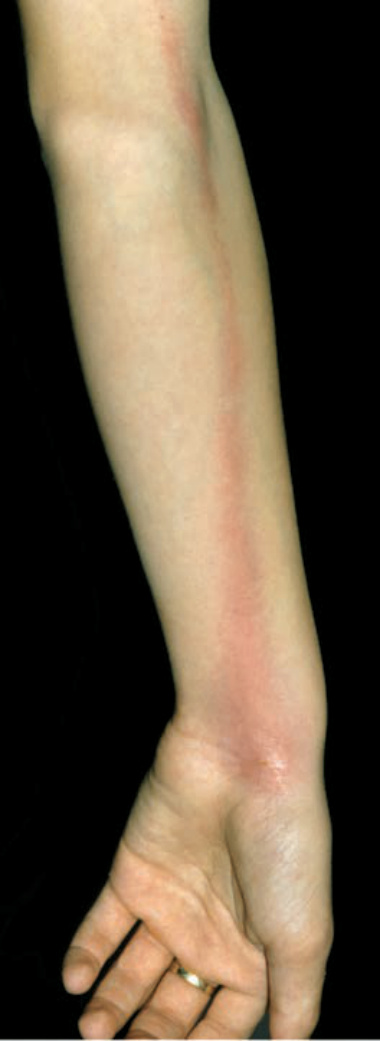
FIGURE 25-35 • Acute lymphangitis of forearm S. aureus A small area of the cellulitis on the volar wrist with a tender linear streak extending proximally up the arm; the infection spreads from the portal of entry within the superficial lymphatic vessels.