SCARLET FEVER
SCARLET FEVER ICD-10: A38
• Etiology.
• Group A β-hemolytic streptococcus (GAS) (S. pyogenes), erythrogenic toxin-producing strains.
• Exfoliative toxin (ET)-producing S. aureus.
• Clinical Manifestation. Infection: Pharyngitis, tonsillitis, infected wound, or dermatoses. Toxin Syndrome (Scarlet Fever). Acutely ill with high fever, fatigue, sore throat, headache, nausea, vomiting, and tachycardia. Anterior cervical lymphadenitis associated with pharyngitis/tonsillitis. Scarlatiniform exanthema occurs in nonimmune persons. Exanthem. Face flushed with perioral pallor. Finely punctate erythema is first noted on the upper part of the trunk (Fig. 25-44); may be accentuated in skin folds such as the neck, axillae, groin, antecubital, and popliteal fossae; linear petechiae (Pastia sign) occur in body folds. The palms and soles are usually spared. Initial punctate lesions become confluently erythematous, i.e., scarlatiniform. Exanthem fades within 4 to 5 days, followed by desquamation on the body and extremities and by sheet-like exfoliation on the palms and fingers as well as the soles and toes. In subclinical or mild infections, exanthem and pharyngitis may pass unnoticed. Enanthem. Pharynx beefy red. Forchheimer spots: Small red macules on soft palate. Punctate petechiae may occur in the palate. White tongue: Initially is white with scattered red, swollen papillae (white strawberry tongue) (Fig. 25-45). Red strawberry tongue: By the fourth or fifth day, the hyperkeratotic membrane is sloughed, and the lingular mucosa appears bright red (Fig. 25-45).
• Complications. Acute rheumatic fever 1 to 4 weeks after onset of pharyngitis (incidence markedly decreased over past five decades), acute glomerulonephritis more common after impetigo with nephritogenic strain of GAS (types 2, 4, 12, 49, and 60), guttate psoriasis (see Section 3) and erythema nodosum (see Section 7).
• Differential Diagnosis. Viral exanthema, adverse cutaneous drug eruption, Kawasaki syndrome, and infectious mononucleosis.
• Diagnosis. Rapid direct antigen tests: Used to detect GAS antigens in throat swab specimens. Isolate GAS on culture of specimen from throat or wound. Blood cultures are rarely positive. Centor criteria for diagnosis of acute streptococcal pharyngitis: History of fever; tonsillar exudates; tender anterior cervical adenopathy; absence of cough.
• Treatment. Systemic penicillin is the drug of choice; alternatives are erythromycin, clindamycin, clarithromycin, or cephalosporins.
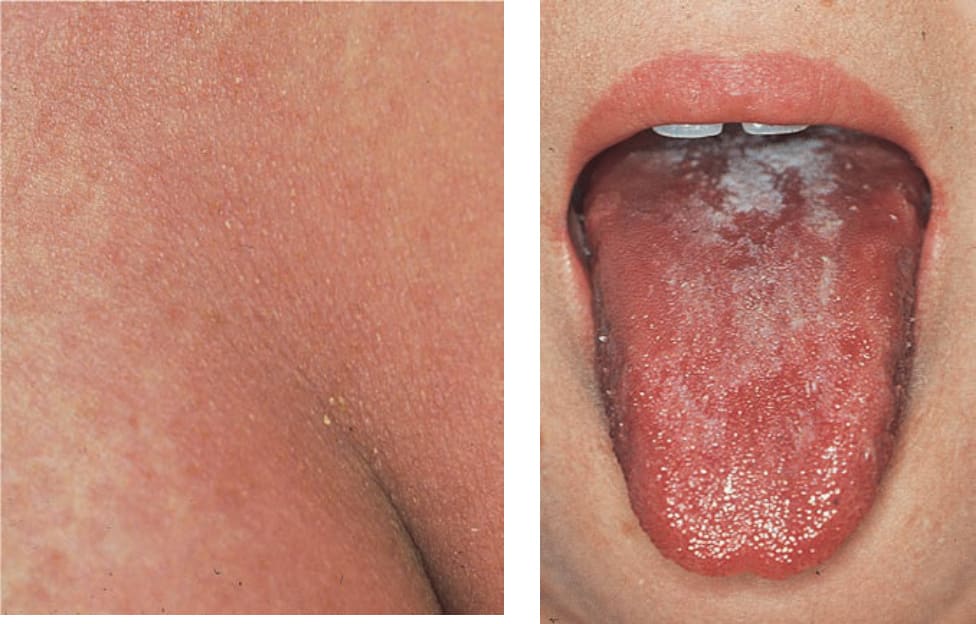
FIGURE 25-44 • Scarlet fever: Exanthem Finely punctated erythema has become confluent (scarlatiniform); petechiae can occur and have a linear configuration within the exanthem in body folds (Pastia line).
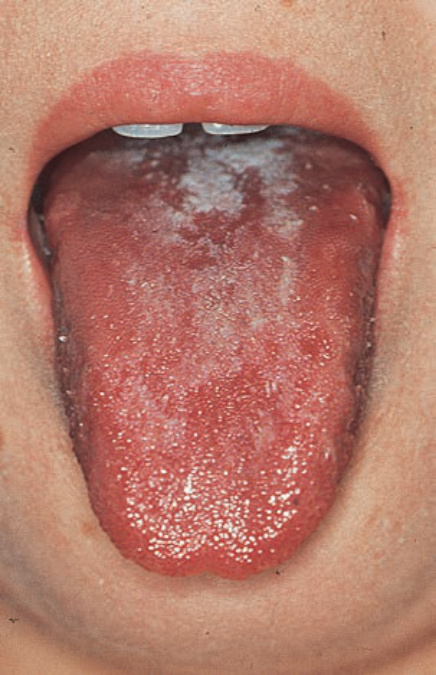
FIGURE 25-45 • Scarlet fever: White and red strawberry tongue The white patches at the back of the tongue represent residua of the initial white strawberry tongue.