SMALLPOX
SMALLPOX ICD-10: B03
• Smallpox is a viral infection unique to humans. The disease has been eradicated caused by a global immunization program, with the last case having been reported in 1977. https://www.cdc.gov/smallpox/index.html https://www.who.int/health-topics/smallpox
• Etiology. Variola major and Variola minor. Humans are only host. DNA virus replicates in cell cytoplasma. Transmitted by respiratory droplets. Variola major has a 30% to 50% mortality.
• Pathogenesis. Enters respiratory tract, passing rapidly into local lymph nodes, and producing viremia. Infection with smallpox confers lifelong immunity.
• Clinical manifestation. Acute onset of fever, followed by exanthem. Small red macules evolve to papules over 1 to 2 days. Initially, on the face, forearms and mouth, then gradually becomes disseminated. In 1 to 2 more days, papules become vesicles. Vesicles evolve to pustules about 4 to 7 days after onset of the rash (Fig. 27-8), and lasts for 5 to 8 days. Followed by umbilication and crusting (Fig. 27-8). Lesions are generally all at the same stage of development. Pockmarks/pitted scars occur in 65% to 85% of severe cases, especially on the face (Fig. 27-9). Secondary Staphylococcus aureus infection with abscesses and cellulitis may occur in smallpox lesions. Enanthema (tongue, mouth, or oropharynx) precedes exanthem by a day.
• Differential Diagnosis. Severe chicken pox (varicella lesions are in different stages of development), measles, secondary syphilis (great pox), hand-foot-and-mouth disease (HFMD) (coxsackievirus A-16), cowpox, monkeypox, and tanapox.
• Treatment. Report possible smallpox to public health officials; diagnosis confirmed in a Biological Safety Level 4 laboratory where staff members have been vaccinated. Cidofovir may be effective.
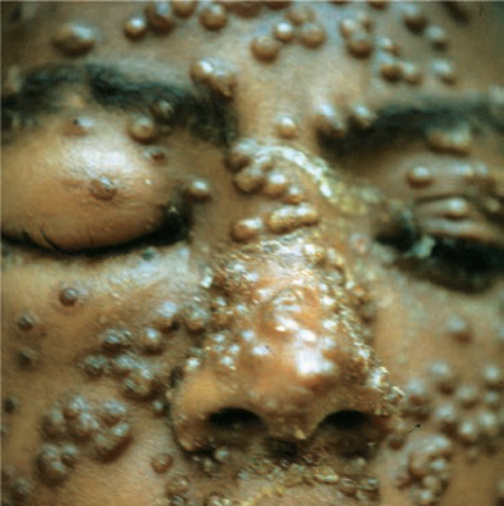
FIGURE 27-8 • Smallpox: variola major Multiple pustules becoming confluent on the face.
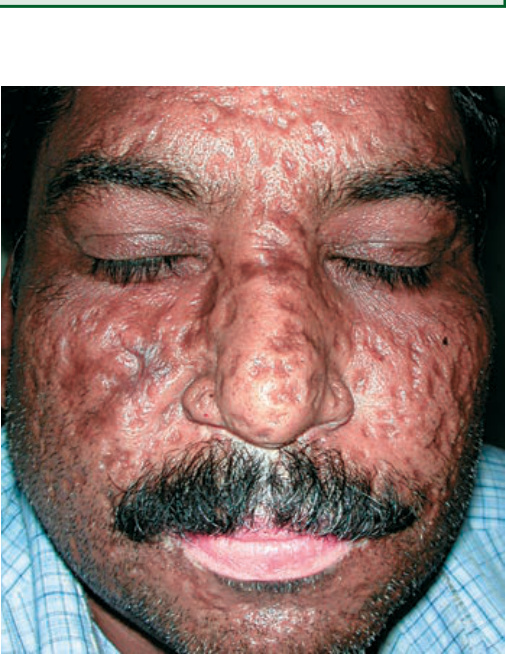
FIGURE 27-9 • Smallpox: scarring on face A 50-yearold Indian man with a history of smallpox as a child has multiple depressed scars on face 40 years after smallpox infection. (Used with permission from Atul Taneja, MD.)