HUMAN AFRICAN TRYPANOSOMIASIS
HUMAN AFRICAN TRYPANOSOMIASIS ICD-10: B56
• Synonym. Sleeping sickness.
• Etiology. Trypanosoma brucei gambiense causes West African sleeping sickness; accounts for 95% of reported cases. Trypanosoma brucei rhodesiense causes East African sleeping sickness.
• Epidemiology. Vector: tse-tse flies.
• Primary reservoir. West African sleeping sickness: humans. East African sleeping sickness: antelope and cattle.
• Demography. West Africa: Ivory Coast, Chad, Central African Republic; rural populations. East Africa: Sudan; workers in wild areas, rural populations, and tourists in game parks.
CLINICAL MANIFESTATION
ACUTE INFECTION Stage I disease. Trypanosomal chancre appears in some patients at inoculation site (Fig. 29-7); painful; 7 to 14 days after tse-tse fly bite. Typically 2 to 5 cm indurated; may ulcerate; resolved in few weeks. Parasites can be seen in fluid expressed from chancre and buffy coat. Systemic findings. Fever, arthralgias, malaise, localized facial edema, and moderate splenomegaly. Lymphadenopathy is prominent in T. b. gambiense trypanosomiasis. Course is more rapid in East African type. Tourist with T. b. rhodesiense disease may develop systemic signs of infection near the end of the trip. CHRONIC INFECTION Stage II disease. Characterized by insidious development of protean neurologic symptoms. Progressive indifference and daytime somnolence develops. East African type may develop arrhythmias and congestive heart failure before CNS disease develops.
TREATMENT
Pentamidine, melarsoprol, and eflornithine. For late-stage disease, difluoromethylornithine.
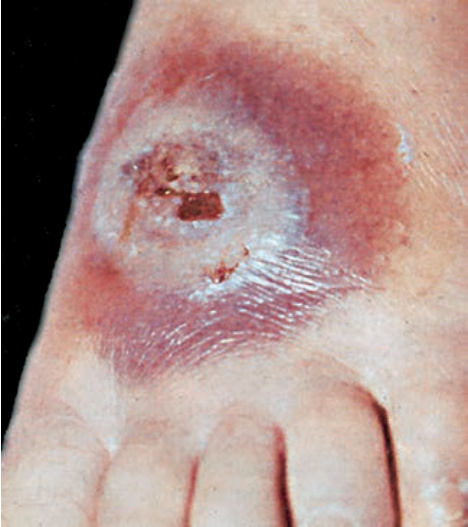
FIGURE 29-7 • Human East African trypanosomiasis: Trypanosomal chancre Ulcerated plaque at bite site on dorsal foot. A macular exanthem was present on the trunk. (Reprinted with permission from Moore AC, Ryan ET, Waldron MA. Case records of the Massachusetts General Hospital weekly clinicopathological exercises. Case 20–2002. A 37-year-old man with fever, hepatosplenomegaly, and a cutaneous foot lesion after a trip to Africa. N Engl J Med. 2002;346(26):2069–2076. © 2002 Massachusetts Medical Society.)