NEISSERIA GONORRHOEAE DISEASE
NEISSERIA GONORRHOEAE DISEASE
• Etiology. N. gonorrhoeae, the gonococcus.
• Colonize Mucosa. Oropharynx, anogenital sites.
• Epidemiology. STI. Shares clinical spectrum of Chlamydia trachomatis; symptoms are usually more severe with gonococcal infections.
CLINICAL MANIFESTATION
LOCAL INFECTION Gonorrhea or “clap.” Gonococcus infects mucocutaneous surfaces of the lower genitourinary tract, the anus and rectum, and the oropharynx. INVASIVE INFECTION Pelvic inflammatory disease (PID). DISSEMINATED INFECTION If untreated, disseminated gonococcal infection (DGI) may occur spreading to deeper structures with abscess formation. Colonizes oropharyngeal
or anogenital mucosa from which gonococcus seeds blood.
ETIOLOGY AND EPIDEMIOLOGY
ETIOLOGY N. gonorrhoeae, the gonococcus (Fig. 30-21). Humans are the only natural reservoir of the organism. Strains that cause disseminated infection tend to cause minimal genital inflammation. In the United States, these strains have occurred infrequently during the past decade. Up to 40% of persons
coinfected with Chlamydia trachomatis. Gonorrhea enhances transmission as well as acquisition of HIV/AIDS. INCIDENCE Gonorrhea is the second most commonly reported notifiable disease in the United States (C. trachomatis is the first): in 2020, 677,769 cases were reported to the CDC.
DEMOGRAPHY Young, sexually active. Symptomatic infection more common in males, particularly non-Hispanic Black persons. TRANSMISSION Sexually, from partner who either is asymptomatic or has minimal symptoms. Neonate exposed to infected secretions in birth canal. About 1% of patients with untreated mucosal gonococcal infection develop disseminated infection (see the following). Gonorrhea may enhance HIV transmission. PATHOGENESIS Gonococcus has an affinity for columnar epithelium; stratified and squamous epithelia are more resistant to attack. Gonococcus penetrates between epithelial cells, causing a submucosal inflammation with polymorphonuclear (PMN) leukocyte reaction with resultant purulent discharge. Strains of gonococcus that cause disseminated infection tend to cause little genital inflammation and thereby escape detection. Most signs and symptoms of disseminated infection are manifestations of immune complex formation and deposition. Multiple episodes of disseminated infection may be associated with abnormality of terminal complement component factors.
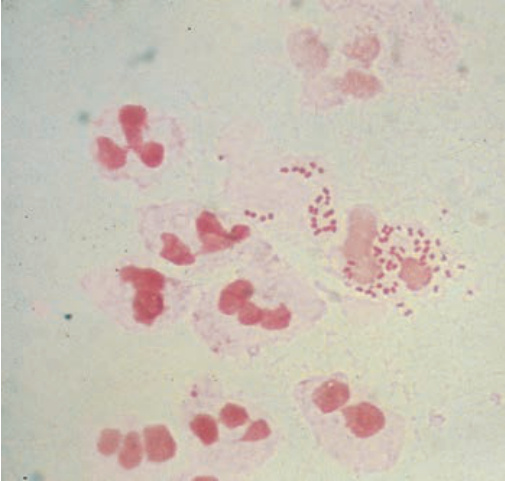
FIGURE 30-21 • Neisseria gonorrhoeae: Gram stain Multiple, gram-negative diplococci within polymorphonuclear leukocytes as well as in the extracellular areas of a smear from a urethral discharge.