TERTIARY/LATE SYPHILIS
TERTIARY/LATE SYPHILIS ICD-10: 52.9
CLINICAL MANIFESTATION
GUMMA Nodular or papulosquamous plaques that may ulcerate and form circles/arc (Fig. 30-34). May expand rapidly causing destruction. May be indolent and heal with scarring. Solitary. Skin: Any site, especially on the scalp, face, chest (sternoclavicular), or calf. Internal: Skeletal system (long bones of legs), oropharynx, upper respiratory tract (perforation of nasal septum, palate), larynx, liver, and stomach. NODULAR ULCERATIVE SYPHILIDES Like gumma but flatter. Undergo spontaneous partial healing but recur at periphery. May be circular or serpiginous. ASYMPTOMATIC NEUROSYPHILIS Occurs in 25% of patients with untreated late latent syphilis.
Lack neurologic symptoms/signs and CSF abnormalities. Twenty percent of patients with asymptomatic neurosyphilis progress to clinical neurosyphilis in the first 10 years; risk increases with time. MENINGEAL SYPHILIS Onset of symptoms <1 year after infection; headache, nausea/ vomiting, stiff neck, cranial nerve palsies, seizures, and changes in mental status. Meningovascular syphilis. Onset of symptoms 5 to 10 years after infection; subacute encephalitis prodrome followed by stroke syndrome, progressive vascular syndrome. GENERAL PARESIS Onset of symptoms 20 years after infection. PARESIS: Paresis, Affect, Reflexes (hyperactive), Eye (Argyll Robertson
pupils), Sensorium (illusions, delusions, hallucinations), Intellect (decrease in recent memory, orientation, calculations, judgment, insight), and Speech. TABES DORSALIS Onset of symptoms 25 to 30 years after infection; ataxic wide-based gait and foot slap, paresthesia, bladder disturbances, impotence, areflexia, loss of position, deep pain, temperature sensations (Charcot or neuropathic joints, foot ulcers), and optic atrophy. CARDIOVASCULAR SYPHILIS Results from endarteritis obliterans of vasa vasorum. Occurs in 10% of late untreated syphilis, 10 to 40 years after infection. Uncomplicated aortitis, aortic regurgitation, saccular aneurysm, and coronary ostial stenosis.
DIFFERENTIAL DIAGNOSIS
Plaque(s) ± ulceration ± granulomas: Cutaneous tuberculosis, cutaneous atypical mycobacterial infection, lymphoma, and invasive fungal infections.
DIAGNOSIS
Clinical findings, confirmed by STS and lesional skin biopsy; dark-field examination always negative.
COURSE
In untreated syphilis, 15% of patients develop late benign syphilis, mostly skin lesions. Tertiary syphilis is now rare. Previously, patients presenting with tertiary syphilis gave a history of lesions of 3 to 7 years’ duration (range, 2 to 60 years); gumma developing by the 15th year. As noted, there are neurologic and cardiovascular complications of tertiary syphilis if left untreated. Consider neurosyphilis in differential diagnosis of neurologic disease in HIV disease.
TREATMENT
Intramuscular benzathine penicillin 2.4 million units once a week for 3 weeks. Patients allergic to penicillin should be treated by an infectious disease specialist. NEUROSYPHILIS Consult CDC guidelines.
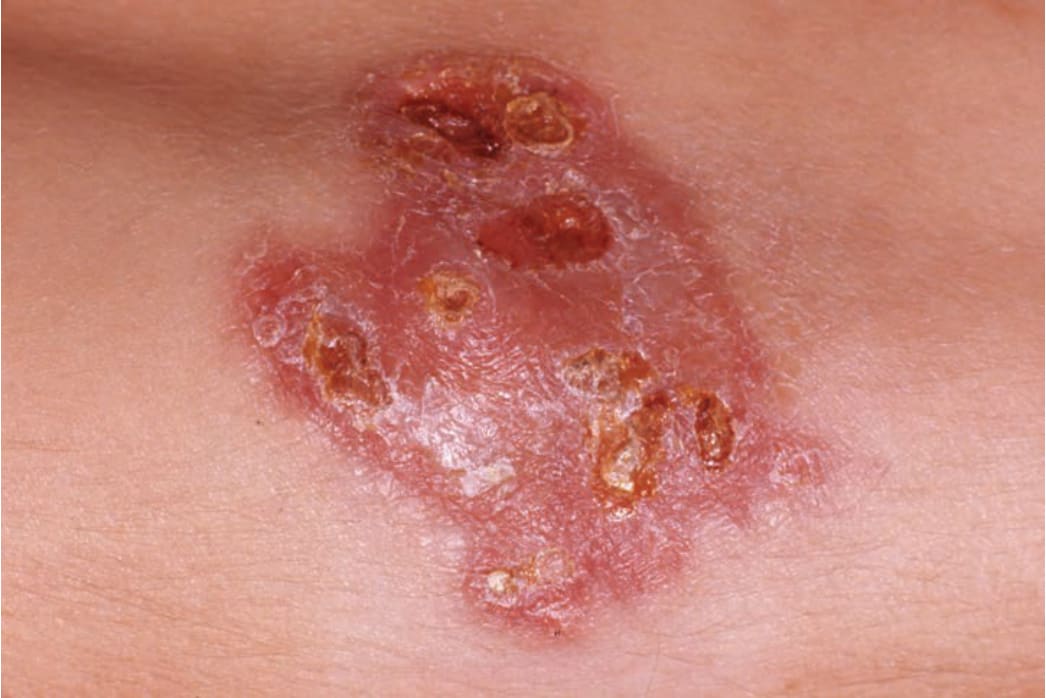
FIGURE 30-34 • Tertiary syphilis. Gumma Tan, firm, well-defined plaque with multiple ulcerations in the scapular region.