PARONYCHIA
PARONYCHIA ICD-10: L03.0
• Nail fold inflammation.
• Acute: Bacterial
• Staphylococcus > Streptococcus, Escherichia coli.
• Often occurs after a minor trauma.
• Nail fold is erythematous, swollen and warm, can also have visible pus.
• Treat with incision and drainage, antibiotics (dicloxacillin, cephalexin, clindamycin, trimethoprim/sulfamethoxazole).
• Chronic: inflammatory (Fig. 32-2)
• Associated with damage to the cuticle, mechanical or chemical.
• Candida, trauma, wet exposure, medications (targeted chemotherapy, retinoids, indinavir).
• Nail fold is erythematous, sometimes scaly and sensitive, with mild swelling and an absent hyponychium (cuticle).
• Treat by avoiding irritants, manipulation and excessive water exposure. Topical and/or intralesional steroids, consider topical antifungal if suspected infection.
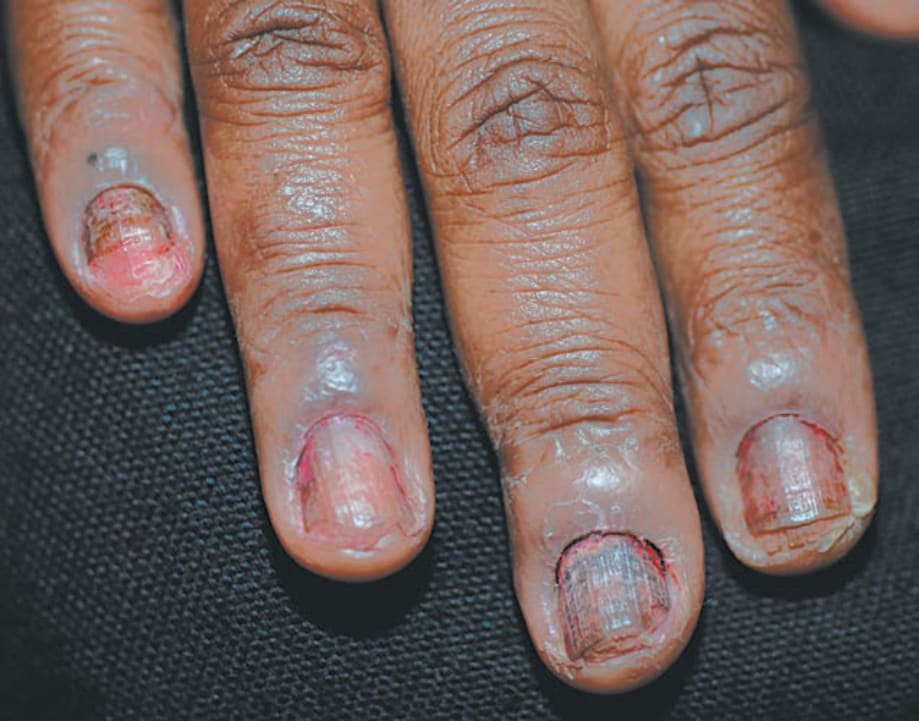
FIGURE 32-2 • Chronic paronychia The distal fingers and periungual skin are red and scaling. The cuticle is absent; a pocket is present, formed as the proximal nail folds separate from the nail plate. The nail plates show trachonychia (rough surface with longitudinal ridging) and onychauxis (apparent nail plate thickening caused by subungual hyperkeratosis of nail bed). The underlying problem is psoriasis. Candida albicans or Staphylococcus aureus can cause space infection in the “pocket” with intermittent erythema and tenderness of the nail fold.