ONYCHOLYSIS
ONYCHOLYSIS ICD-10: L60.1
• Lifting of the nail plate from the nail bed (Fig. 32-3).
• Etiology
• Inflammatory: Psoriasis (Fig. 32-3), contact dermatitis, photodrug reaction (doxycycline, fluoroquinolones, griseofulvin, voriconazole).
• Infection (Candida).
• Trauma.
• Nail bed tumors.
• Can become secondary infected with P. aeruginosa, causing a brown or greenish discoloration (Fig. 32-4).
• Management: For inflammatory causes, can treat with topical steroid solution (apply under nail) or intralesional steroids. Can also consider systemic therapies for psoriatic onychloysis. Prescribe antifungals for onycholysis secondary to a yeast infection.
A B
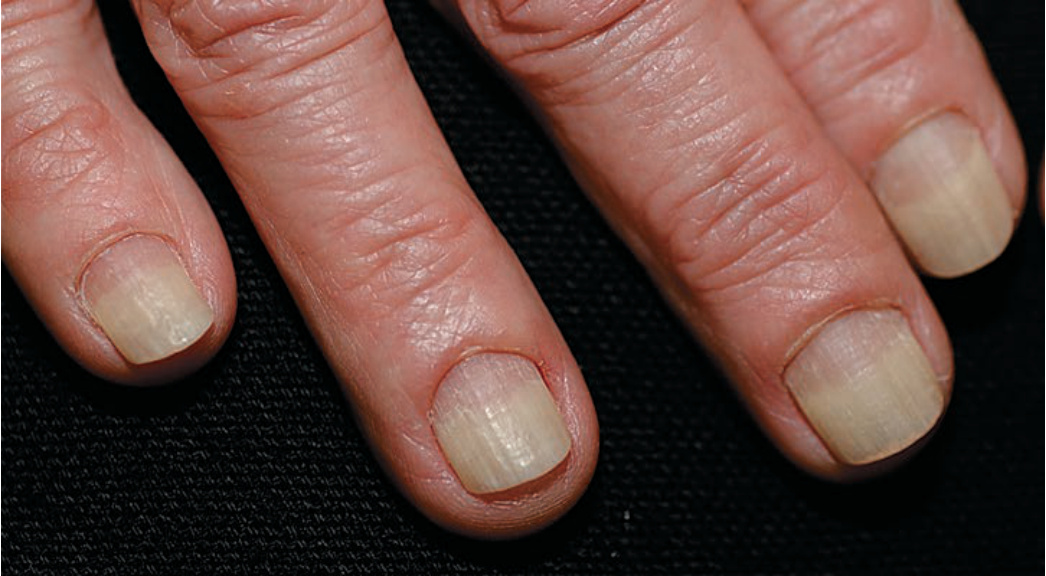
FIGURE 32-3 • Onycholysis A 60-year-old female with distal onycholysis of fingernails, mild chronic paronychia, and loss of cuticle. Psoriasis is the likely underlying problem.
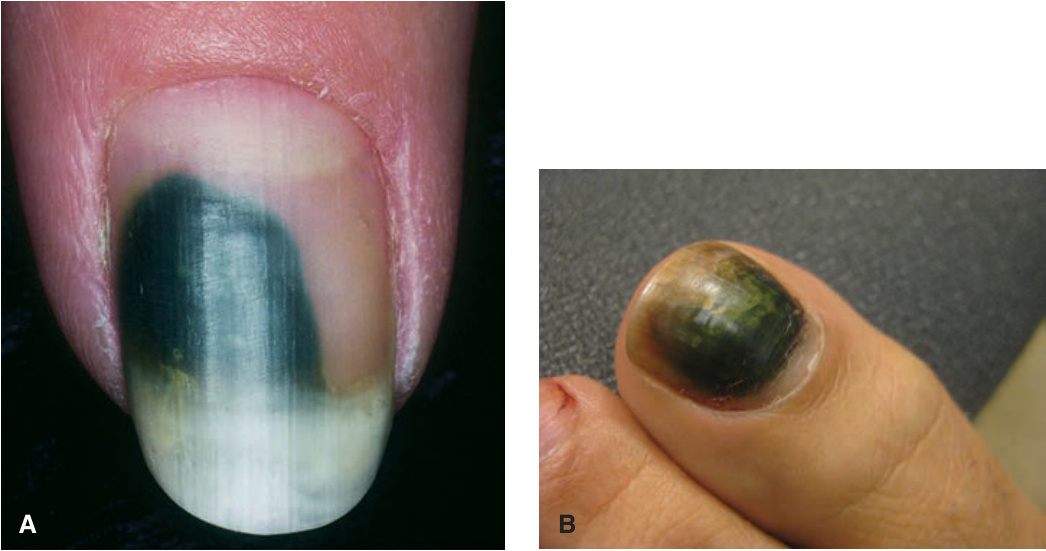
FIGURE 32-4 • Onycholysis with Pseudomonas colonization (A) Psoriasis has resulted in distal onycholysis of the thumbnail. (B) Infection with Pseudomonas aeruginosa has produced the green-black discoloration of the undersurface of the onycholytic nail.